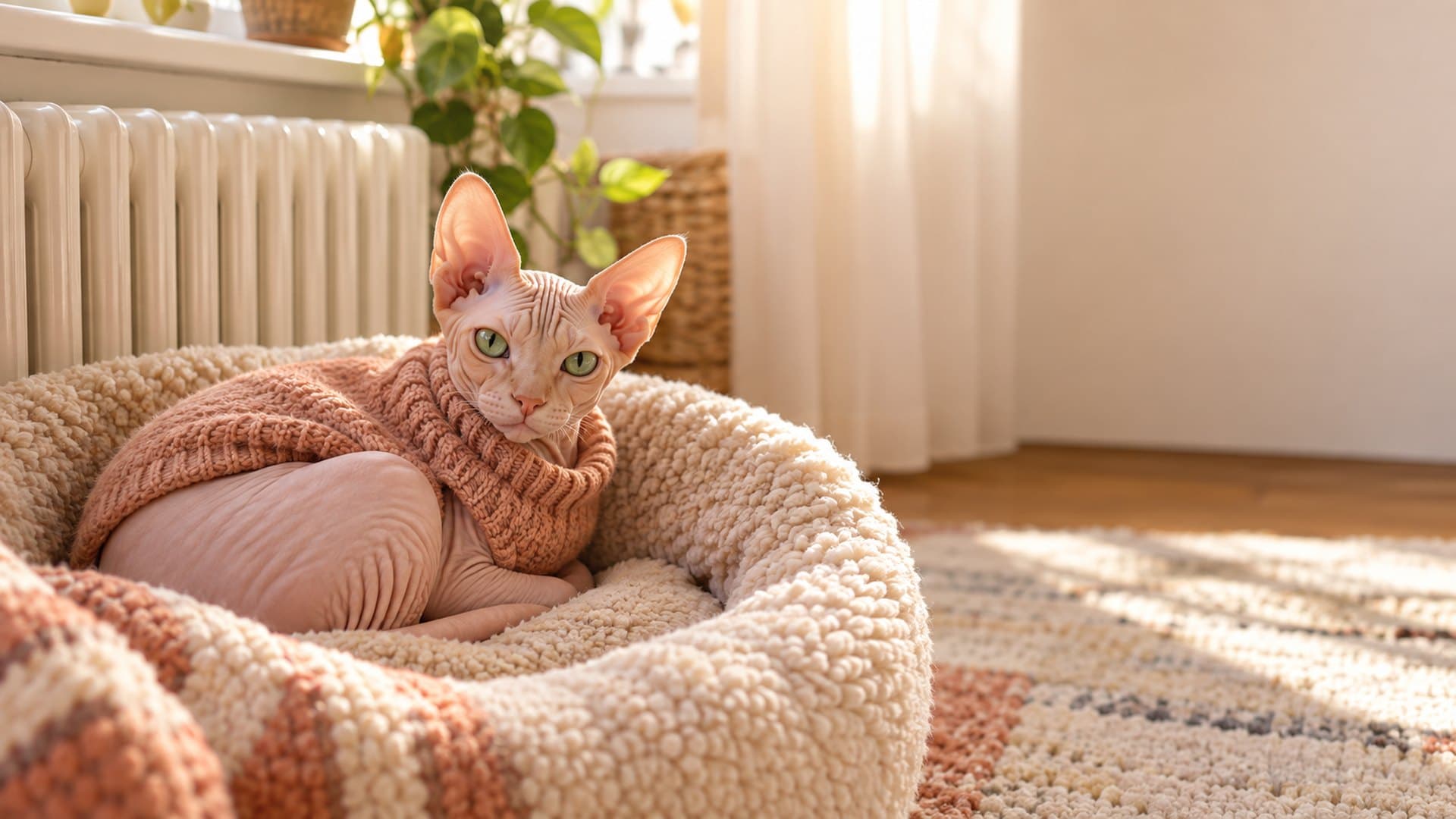

Sphynx personality: an affectionate companion who needs people
Affectionate, chatty and hands-on: what Sphynx cats are like at home, how they cope with being alone and who they suit best.
Published 4 min read

A Sphynx is hard to forget once you have met one: warm as a hot-water bottle, with big ears and an attentive gaze. Yet people who live with these cats rarely talk about looks first. They talk about personality. Sphynx cats are usually described as very affectionate, curious and sociable, with their people at the center of their world. Everything below is a typical portrait of the breed, not a guarantee: every kitten has its own temperament.
A cat who wants to be close
Most Sphynx cats seek physical contact. They follow you from room to room, settle on your lap the moment you sit down and happily dive under the covers when you go to bed. Part of this is about warmth: without fur, snuggling up to a person feels good. But it is not only about temperature. Sphynx cats are genuinely people-oriented and like to be part of everything that happens at home.
Many of them are talkative: they purr, comment on what you are doing and call out if a door is closed. If you are dreaming of a quiet, independent cat who decides when to spend time with you, a Sphynx is unlikely to be that cat.
Energetic and clever
Sphynx cats are agile and quite muscular. They love climbing cat trees, chasing wand toys and exploring cupboards and shelves. Being clever, they quickly work out how to open a drawer or where the treats are kept, so anything your cat should not touch needs to be put away securely.
To channel that energy into play rather than mischief, set aside a few short, active play sessions every day. These work well:
- wand toys with feathers or ribbons to chase;
- balls and toys that roll across the floor;
- puzzle feeders the cat has to work food out of;
- sturdy cat trees and wall shelves to climb.
Many Sphynx cats can learn simple tricks for a treat — coming when called, sitting, giving a paw — and some will even fetch a toy like a dog. Sessions like these are a great way to give your cat something to think about.
Children and other pets
Sphynx cats are usually sociable and patient, so they often get on well with children who know how to handle a cat gently. With no fur to protect it, a Sphynx's skin takes play scratches and rough grabbing harder than a fluffy cat's would. A few simple family rules:
- play with a wand toy, not with hands;
- don't hold the cat when it wants to leave, and don't wake it up;
- the cat has a spot where nobody disturbs it.
Sphynx cats often make friends with other cats and calm dogs, and a companion is also an extra source of warmth. Introduce animals gradually and under supervision, even if both sides seem friendly.
Being alone is hard
For such a contact-loving cat, long hours alone are a real challenge. A Sphynx left on its own for 10–12 hours every day may get bored, call loudly and look for entertainment in places it shouldn't. If you work long hours away from home, consider a second cat with a similar temperament, provide warm beds and puzzle feeders, and always make time in the evening for play and company.
Everyday life with a Sphynx
Living with a Sphynx comes with a few practical quirks. The cat is always looking for warmth: the windowsill above the radiator, your armchair, freshly washed laundry. The skin produces natural oils which, without fur to absorb them, rub off on bedding and favorite spots, so throws and covers will need washing more often. Many owners notice that Sphynx cats have a hearty appetite, so keep an eye on your cat's weight together with your vet. A Sphynx also needs regular skin, ear and claw care, and it's worth getting a kitten used to this early on. You'll find more in our article Sphynx skin care.
Who is a Sphynx right for?
A Sphynx is a good choice for people who are often at home, enjoy physical affection and are ready for some special care. It suits a family where the cat will be a full member of the household, and anyone who doesn't mind a cat sleeping under the duvet.
Think carefully if:
- you are rarely at home and don't plan to get a second cat;
- you want a cat that needs almost no care;
- you are looking for a hypoallergenic cat — no such cat exists, as we explain in Sphynx myths.
Before you choose, talk to the breeder: ask how the kitten behaves with people, how it plays, how confident it is and how its parents' health has been checked.
See whether there are kittens of this breed right now, and learn more on the breed page. If there are no kittens at the moment, join the waiting list.