
Sphynx skin care: bathing, ears, claws and sun protection
Why Sphynx skin gets oily, how often to bathe, how to clean the ears and claws, and how to protect your cat from cold and sun.
Published 4 min read

People often choose a Sphynx thinking that no fur means no fuss. In reality it is the other way round: there is no coat, but regular care is still needed — it just focuses on the skin instead of brushing. The good news is that it comes down to a few simple habits that soon become a shared ritual. The key is to start early and keep things calm.
Why Sphynx skin gets oily
Every cat's skin produces a natural oil called sebum, which keeps it from drying out. In a furry cat, the coat soaks up this oil and spreads it along the hairs. A Sphynx has no coat, so the oil stays on the skin: it becomes sticky, darkens in the folds, around the claws and on the belly, and leaves marks on blankets.
Oily skin is also a comfortable home for Malassezia, a yeast. A 2009 study found it on the skin of 81% of the Sphynx cats examined and on none of the ordinary shorthaired cats in the control group. In a healthy Sphynx this is normal, but regular cleaning helps keep it in check.
Bathing: how often and how
How often to bathe depends on the individual cat. Veterinary dermatologists at Texas A&M note that a Sphynx usually needs a bath no more than once every one to two weeks, and many cats manage with less. Bathing too often dries the skin out. Let the skin guide you: when it feels sticky and looks darker, it is bath time.
How to keep bath time calm:
- warm up the bathroom beforehand and have a large, warm towel ready;
- run a shallow bath of warm, not hot, water;
- use a gentle cat shampoo recommended by your vet and rinse it off thoroughly;
- clean the skin folds gently, but don't pour water into the ears or over the face — wipe the face with a damp cloth instead;
- wrap your cat in the towel straight away, pat it dry and let it warm up somewhere cozy.
Between baths, you can wipe the skin with a soft damp cloth or unscented pet wipes. Introduce your kitten to water gradually, with treats and praise, so bath time never becomes stressful for anyone.
Ears and eyes
A Sphynx's large, open ears have no protective hair and quickly collect dark wax. Check them once a week and, if needed, gently clean the visible part of the ear flap with a cotton pad moistened with a cleaner your vet recommends. Never push cotton buds deep into the ear: it is easy to damage the ear or push the wax further in. If the wax builds up again within a day or two, smells unpleasant or your cat keeps shaking its head, that is a reason to see the vet.
A Sphynx has no eyelashes, so discharge can collect in the corners of the eyes. Wipe it away with a soft damp pad, using a fresh one for each eye. If there is a lot of discharge, its color changes or your cat squints, take it to the vet.
Claws and toes
Oil and dirt like to gather in the folds around the claws and between the toes. Wipe these areas gently during a bath or a check-up. Trim the claws roughly every two to three weeks with proper cat nail clippers, taking off only the clear tip: your cat will scratch itself, and you, less. A good scratching post also helps keep claws in shape.
Warmth and sun
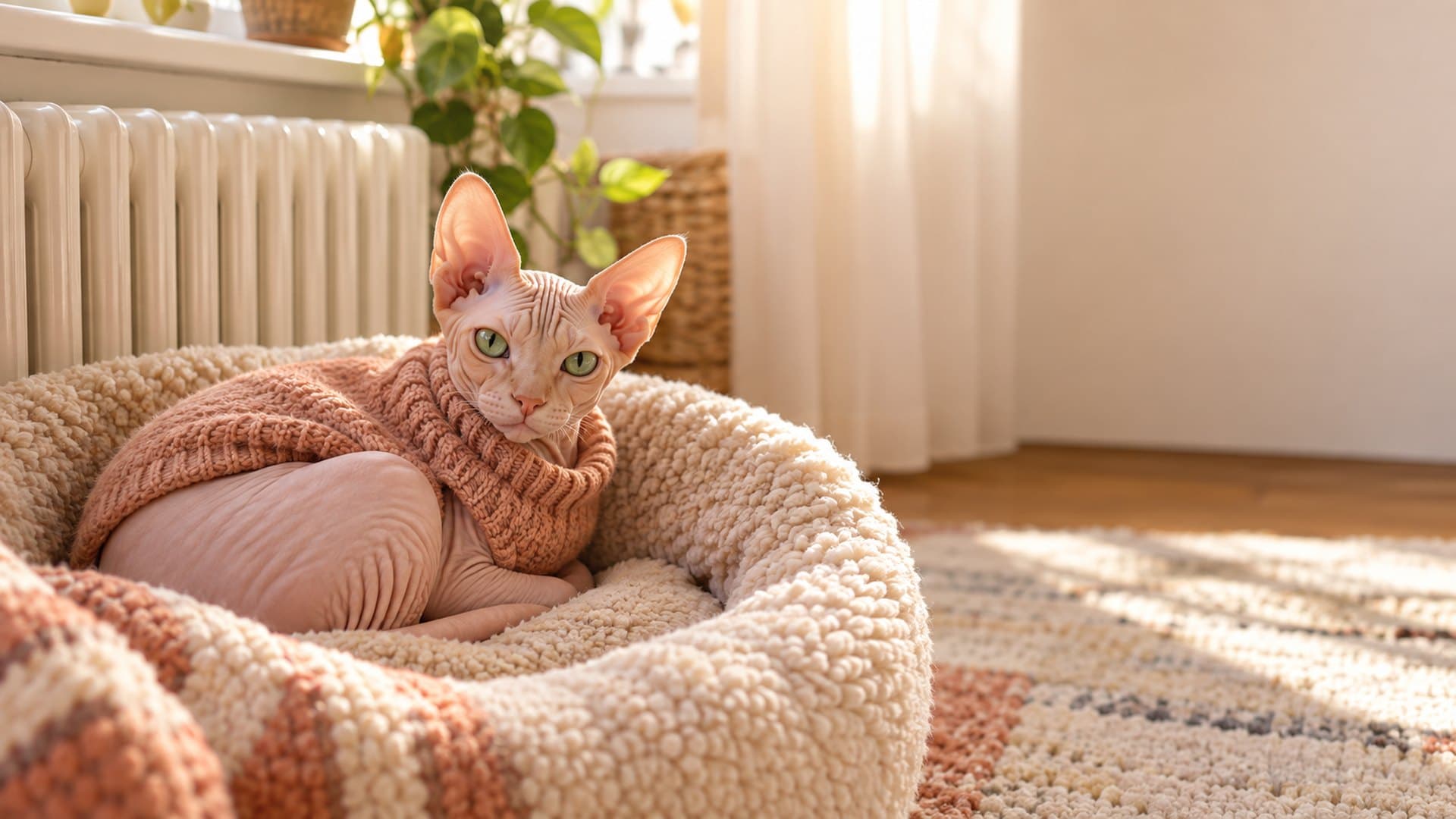
Without fur, a Sphynx gets cold quickly. Provide warm beds, blankets and draft-free hideaways. Clothing is optional: if your cat is happy to wear it, a sweater can help in cooler weather, but never force it. Be careful with heating pads and heaters, as bare skin burns easily. If you get power cuts in winter, prepare a backup warm spot in advance — an enclosed cat house with a blanket, where warmth lasts longer.
The sun is the other side of the coin. Sphynx skin can burn, especially pale skin, so don't leave your cat in direct sun for long and limit balcony time during the hottest hours. Only use sun protection products your vet recommends, because some human sunscreens are harmful to cats if licked off.
When to see the vet
Take your cat to the vet if you notice:
- an unpleasant skin odor, redness, a rash or flaking;
- black spots on the chin or tail that don't go away after cleaning;
- itching, head shaking or a smell from the ears;
- areas your cat won't let you touch.
Diagnosis and treatment are a job for your vet, so don't give your cat any products on your own. For more on the breed's health, read Sphynx health.
Dreaming of a Sphynx? See whether there are kittens of this breed right now, learn more on the breed page or join the waiting list.