

Sphynx health: the heart, the skin and questions for breeders
What we know about HCM in the Sphynx, which checks the parents should have, why DNA tests matter and what to ask a breeder before choosing a kitten.
Published 4 min read
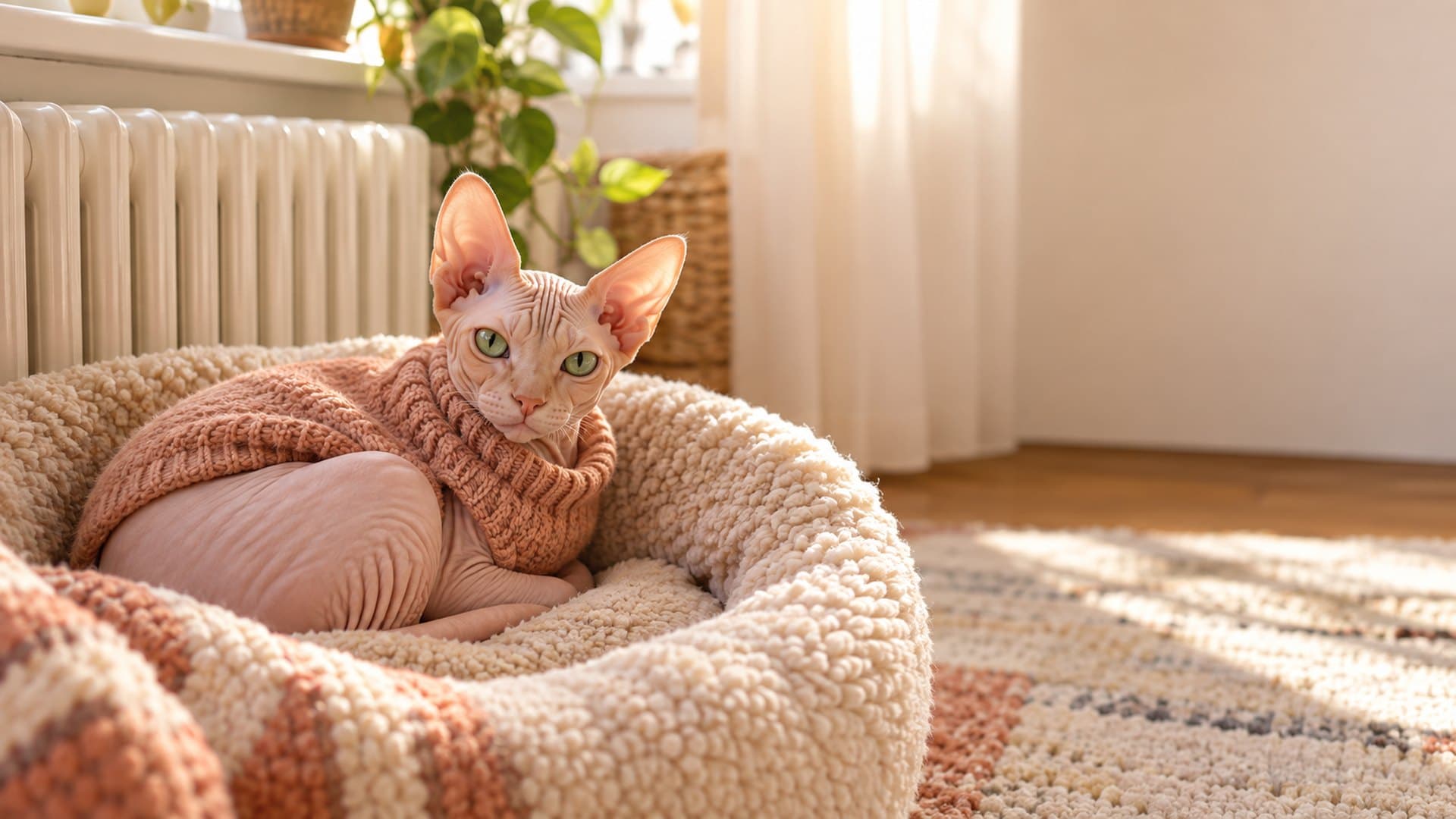
The Sphynx is an affectionate, cheerful cat, but no honest conversation about the breed is complete without talking about health. The Sphynx has a few well-documented predispositions, and it is worth knowing about them before a kitten moves in with you. This article is not meant to scare you, but to help you ask a breeder the right questions. Diagnosis and treatment are always a matter for your vet.
The heart: why everyone talks about HCM
Hypertrophic cardiomyopathy (HCM) is the most common heart disease in cats: the walls of the heart muscle thicken, and the heart works less efficiently. It occurs in many breeds, but the Sphynx is one of those in which it is found especially often. In a 2024 study in New Zealand, a cardiologist examined 55 Sphynx cats with no signs of illness, and HCM was found in 40% of them at a median age of 5.8 years. Besides HCM, congenital heart defects such as mitral valve dysplasia have also been described in the breed.
The tricky thing about HCM is that a cat can look perfectly healthy for a long time. Contact your vet urgently if you notice:
- fast or labored breathing at rest, or open-mouth breathing;
- lethargy, reluctance to play, loss of appetite;
- sudden weakness or paralysis of the hind legs with pain, which can be a sign of a blood clot.
Echocardiography and DNA tests: what they tell you
The main way to detect HCM is an ultrasound scan of the heart (echocardiography) performed by a veterinary cardiologist. It is a painless procedure. HCM can develop at any age, so a single scan in youth is no lifelong guarantee — repeat scans matter. Responsible breeders screen their breeding cats regularly, usually every year. The UK registry GCCF, for example, requires a heart scan certificate for each parent, dated within twelve months of the mating, before Sphynx kittens can be registered.
There is also a DNA test for a variant of the ALMS1 gene that has been linked to HCM in the Sphynx. But it comes with important caveats. North Carolina State University's veterinary school, which offers the test, notes that the variant was found in about 60% of affected cats, and the New Zealand study found no association between this variant and an HCM diagnosis. In other words, a negative result does not guarantee a healthy heart, and a positive one does not mean the cat will definitely get ill. The test adds information; it does not replace echocardiography.
Congenital myasthenic syndrome: a reliable DNA test exists
An inherited neuromuscular disease, once called spasticity or hereditary myopathy, has been described in Sphynx and Devon Rex cats. We now know it is a congenital myasthenic syndrome caused by a mutation in the COLQ gene. Affected kittens become weak after exertion in their first months of life, let their heads droop and may have trouble swallowing. The disease is recessive: only a kitten that inherits the mutation from both parents is affected. Carriers are uncommon in the Sphynx, and a simple DNA test makes it possible to avoid affected kittens entirely, so asking for the parents' results is perfectly reasonable.
Skin, ears and sun
Without fur, the skin is more vulnerable. International Cat Care lists yeast overgrowth, ear inflammation and certain skin diseases among the breed's problems, and bare skin also burns easily in the sun. Regular care significantly reduces the risks, and any skin changes should be checked by a vet. For day-to-day care, read Sphynx skin care.
What else to know
- Blood type. Some Sphynx cats have blood type B. This matters for blood transfusions and for breeding, so it helps if your cat's blood type is known.
- Life expectancy. A 2024 UK study of veterinary records found that the Sphynx had the shortest life expectancy of the breeds analyzed. These are population statistics, not a forecast for any individual cat, but they show clearly why screening and regular check-ups matter so much.
Questions to ask the breeder
- Do the parents have recent echocardiography reports from a cardiologist, and when were they done?
- Have the parents been tested for congenital myasthenic syndrome (COLQ)? Are their blood types known?
- Do you test for ALMS1, and how do you interpret the result?
- Has a vet examined the kitten, and which vaccinations and parasite treatments have been done?
- Will there be a written contract, and what does it say about the kitten's health?
- Can I come to you with questions after the kitten moves in?
An open breeder will be happy to show you the paperwork and explain the results. After the kitten moves in, discuss a check-up plan with your vet, including heart screening.
Find out more on the breed page. Check whether there are kittens of this breed right now, or join the waiting list.


