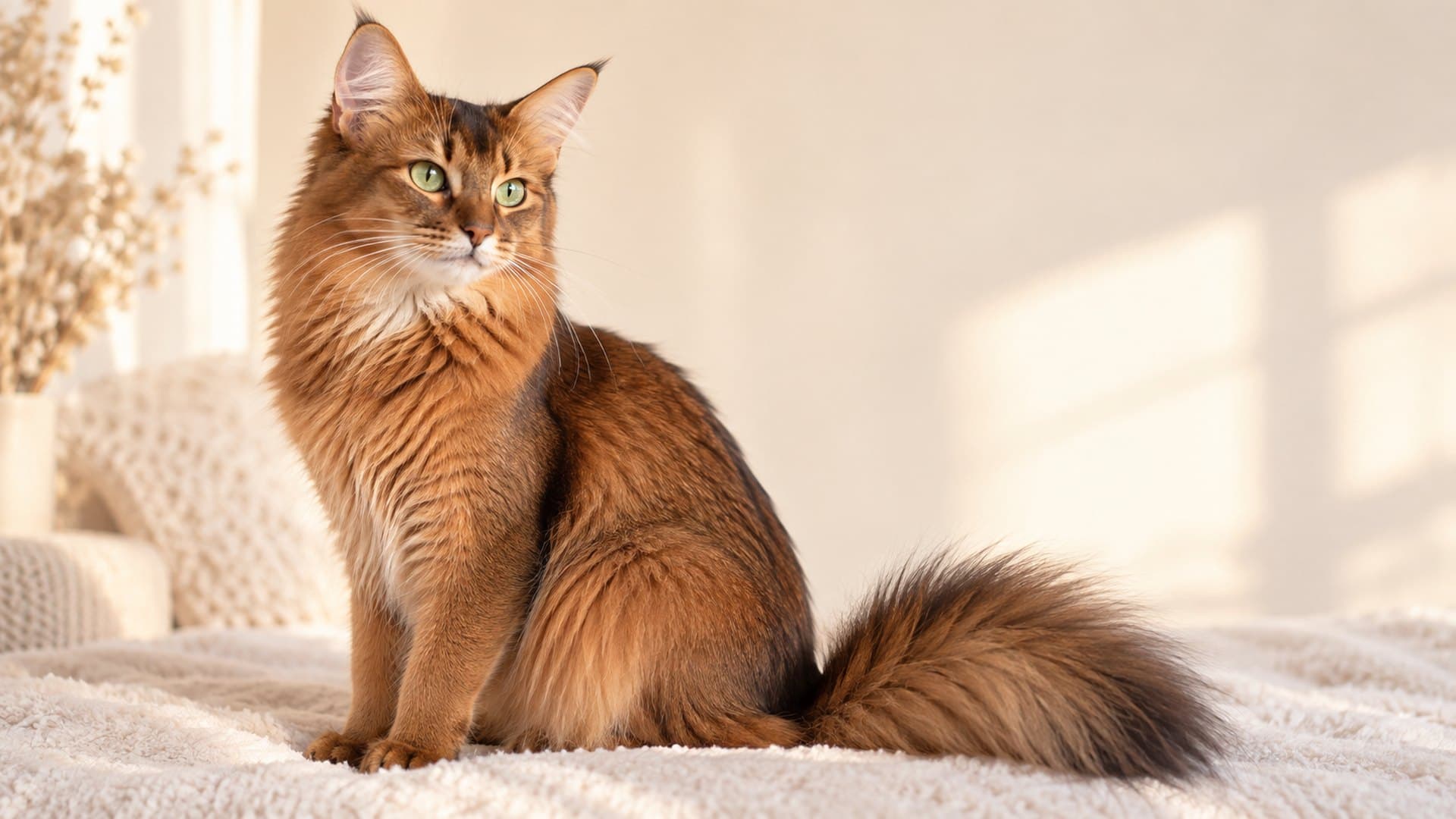

The Somali personality: everyday life with the “fox cat”
Playful, sociable and very clever: what Somalis are like at home, how they compare with Abyssinians, how much attention they need and who they suit.
Published 4 min read

The Somali is often called the “fox cat” for its bushy tail, reddish coat and knowing expression. Yet owners talk less about looks and more about personality: the Somali is a lively, sociable and very clever cat that wants to be part of family life. As always, this is a general portrait of the breed, not a guarantee: every kitten has its own temperament.
An Abyssinian temperament in a fluffy coat
The Somali is the longhaired branch of the Abyssinian breed, and its personality matches. The Cat Fanciers' Association (CFA) describes Somalis in the same words as Abyssinians: busy, active, agenda-driven and affectionate. The semi-long coat makes the cat look like a calm sofa beauty, but that impression is misleading: a Somali runs, jumps, climbs cat trees and explores every corner of the home.
Somalis do have quiet spells, usually after play and a meal, somewhere warm and preferably high up. But if you are looking for a cat that dozes for most of the day, this is not the breed for you.
Paws like a monkey's
Owners often name nimble front paws as one of the breed's funniest traits. The CFA's article on Somali history mentions that these cats handle objects much as a monkey does: fishing toys out from under the sofa, pulling small things out of pockets, opening cupboards and drawers. Many Somalis happily fetch, and some love playing with water, catching drips from the tap or dipping a paw in the bowl.
It is worth channelling that cleverness in a peaceful direction:
- offer puzzle toys that make the cat use its paws to get at treats;
- hide some of the dry food around the home so the cat can “hunt”;
- teach simple tricks for a reward: sit, give a paw, come when called;
- fit childproof locks on kitchen cupboards that hold cleaning products.
Love without the lap
Somalis usually become very attached to their people: they follow you around, check what you are doing and greet you at the door. They show love in their own way, with head bumps, kneading and settling down beside you. The CFA notes that Somalis communicate mostly through body language rather than their voice. The UK's Governing Council of the Cat Fancy (GCCF) describes their chirping: soft, melodic sounds with which the cat seems to keep the conversation going.
Most Somalis, however, do not like to sit on a lap for long: the GCCF says outright that their high energy means they are not usually lap cats. Short cuddles, yes; hour-long lap sessions, less often.
Children, other pets and time alone
Their sociable nature helps Somalis get on with children who treat a cat gently and respectfully. The best games to share are with a wand toy or a ball, not with hands. Children should know that a cat must not be grabbed or held when it wants to leave.
Somalis usually live happily with other cats and calm dogs if introductions are gradual. The breed has a strong hunting instinct, so birds, rodents and fish are best kept well out of the cat's reach.
Somalis do not like long stretches alone. If you are at work all day, make sure the environment is interesting: cat trees, puzzle toys, a safe windowsill. Some families find a second cat with a similar temperament helps, but that should be a considered decision, not just a “cure for boredom”.
Kitten and adult
A Somali kitten is energy without a break: play, a short nap and more play. Habits form in the first months at home, so show your kitten early on where it can scratch and play and where it cannot. Scratching posts near favourite spots, a wand toy instead of hands during games, and calm introductions to visitors, the vacuum cleaner and the carrier will help it grow up confident. Somalis calm down a little with age, but many stay playful as adults and follow their people everywhere. For a cat like this, playing together is not an optional extra but part of daily care, just like fresh water in the bowl.
Who is a Somali right for?
A Somali is a good choice if you:
- want an active, sociable cat that takes part in family life;
- are ready to play every day and come up with new challenges;
- do not mind combing a fluffy coat once a week.
It may be worth looking at another breed if you dream of a quiet lap cat, are rarely at home, or want every small object to stay exactly where you left it.
Before choosing, talk to the breeder about the individual kitten's nature. Find out more on the breed page, look for available kittens of this breed, and if there are none right now, join the waiting list.