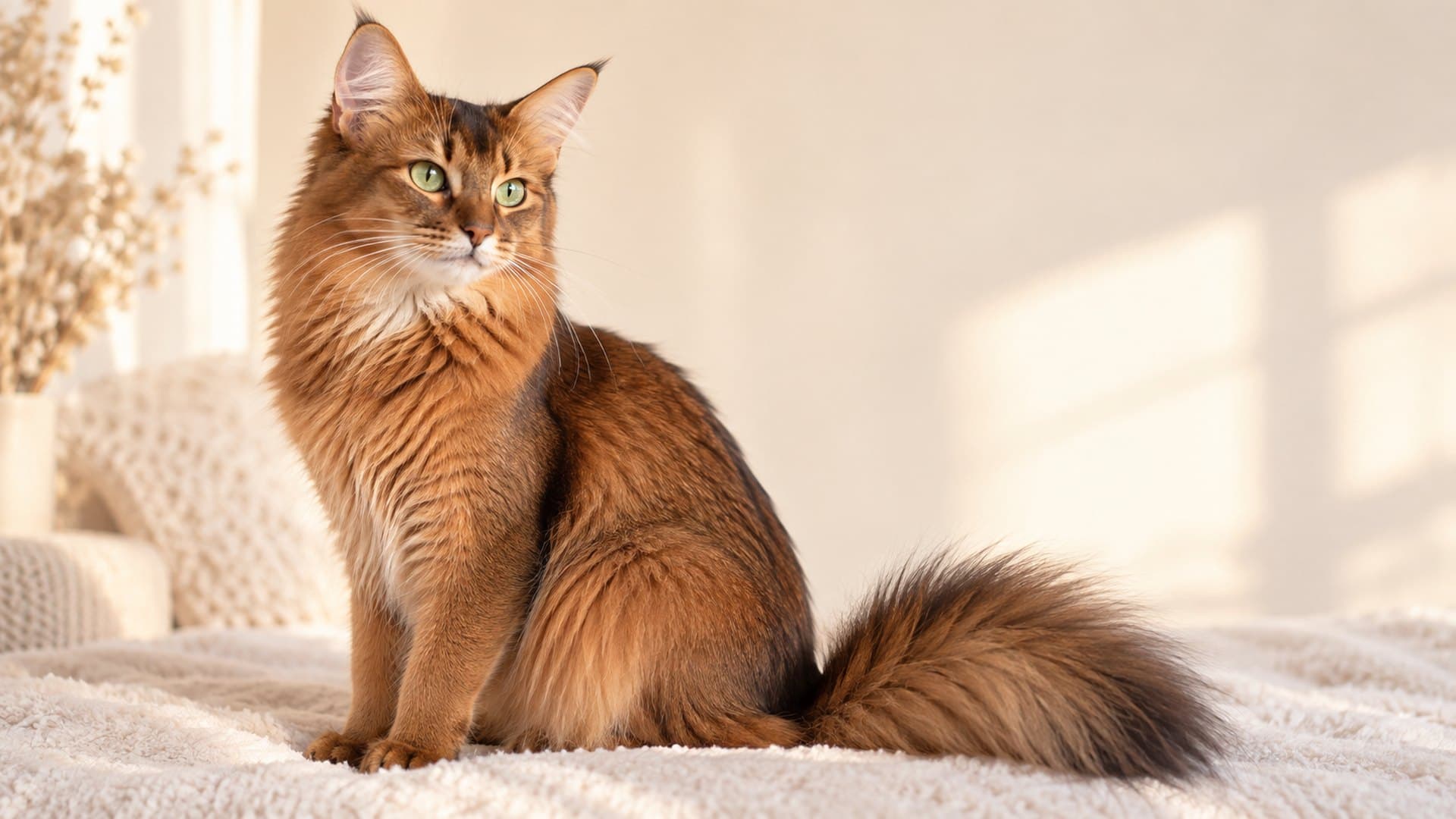

A home for a Somali: space, play and safety for an active cat
How to set up a home for an energetic “fox cat”: vertical space, work for paws and brain, and safe windows, cupboards and water.
Published 4 min read

The Somali lives in a three-dimensional world: to this cat, the floor is only the ground floor. It loves heights, opens cupboards, takes an interest in water and investigates every new object. A well-arranged home gives all that energy a safe outlet and gives the cat a sense that its needs are understood. Here is how to prepare your home for a Somali, whether you are bringing home a kitten or an adult.
Think upwards
International Cat Care reminds us that cats are natural climbers and that high places with a view of their surroundings make them feel safe. For an active Somali, this matters even more. Provide:
- a sturdy floor-to-ceiling cat tree that does not wobble when the cat jumps;
- wall shelves with a non-slip surface, arranged like a staircase;
- a cleared space on top of a wardrobe or bookcase that the cat can reach safely;
- beds in warm, high spots, such as near a radiator or on the top level of the cat tree.
Make sure there is an easy way down from every high place: a Somali shoots up effortlessly, but coming down should be safe too. If space is tight, a corner cat tree or a few shelves above the sofa will do: what matters is not the size of the flat but the chance to move up and down.
Work for paws and brain
A Somali soon gets bored if the day is predictable. Toys that just lie on the floor quickly lose their appeal, so International Cat Care suggests putting some away and rotating them regularly. A few ideas:
- puzzle feeders that make the cat scoop out food with a paw;
- a “hunt” for part of the daily ration, hidden in different corners;
- feather wands for active play with you every day;
- cardboard boxes, paper bags with the handles removed and new, safe objects to investigate;
- scratching posts, tall vertical ones and horizontal ones, in different materials.
Play that mimics hunting works best: stalk, chase, catch. Follow it with a meal, and your cat will settle down to rest. Several short sessions of 5–10 minutes through the day often work better than one long game in the evening.
Clever paws: cupboards, doors and water
The Somali's nimble front paws are a source of pride for owners and the reason for childproof locks in the kitchen. Somalis can open cupboards, pull out drawers and reach things stored at the back. So:
- keep cleaning products, medicines and laundry pods in closed cupboards with locks;
- check that your cat is not hiding inside before starting the washing machine or tumble dryer;
- keep the toilet lid down, especially while your kitten is small, and never leave buckets of water unattended;
- fit a secure lid on any aquarium.
Many Somalis love playing with water. Instead of the tap, you can offer a drinking fountain: International Cat Care notes that some cats prefer running water.
Windows and balconies
Curiosity and a love of heights make windows one of the biggest dangers. International Cat Care reports that the cats most often injured in falls are young, many of them under a year old: they fall while playing, walking along a ledge or chasing birds. Protect windows with strong cat-safe mesh that still lets you open them fully, and enclose the balcony completely with netting. Watch out for tilt-open windows too: a cat may try to squeeze through the narrow gap and get stuck. Even on the ground floor an open window is a risk: the cat may slip outside, get frightened and not find its way back.
Small objects, threads and plants
Somalis like to carry off small things, so hair ties, thread, ribbons, tinsel and needles should never be left lying around: if swallowed, they can be very dangerous. Hide cables in cable covers. Before buying flowers or a houseplant, check that they are safe for cats. Lilies are especially dangerous: every part of the plant is toxic to cats. If your cat may have come into contact with a lily, call your vet immediately. During holidays and building work, check your home especially carefully: Christmas decorations, building materials and open doors are all new temptations for a curious cat.
Company and time alone
Even the best-arranged home cannot replace people. Somalis become attached to their family and cope poorly with long periods alone. If you are at work all day, leave your cat new puzzles and set aside time to play together in the evening. Some families find that a second cat with a similar temperament helps. When you are home, let your cat stay close: sitting on a shelf by your desk, watching you clean, “inspecting” the shopping bags. For a Somali, that counts as company too. And if you notice your cat grooming excessively, losing its appetite or behaving unusually, take it to the vet: stress and illness can both show up this way.
Find out more on the breed page. Look for available kittens of this breed, and if there are none right now, join the waiting list.