
Selkirk Rex grooming: how to keep the curls and a healthy coat
How often to comb a short or long curly coat, which tools to avoid, when to bath a Selkirk and why its ears need attention.
Published 4 min read

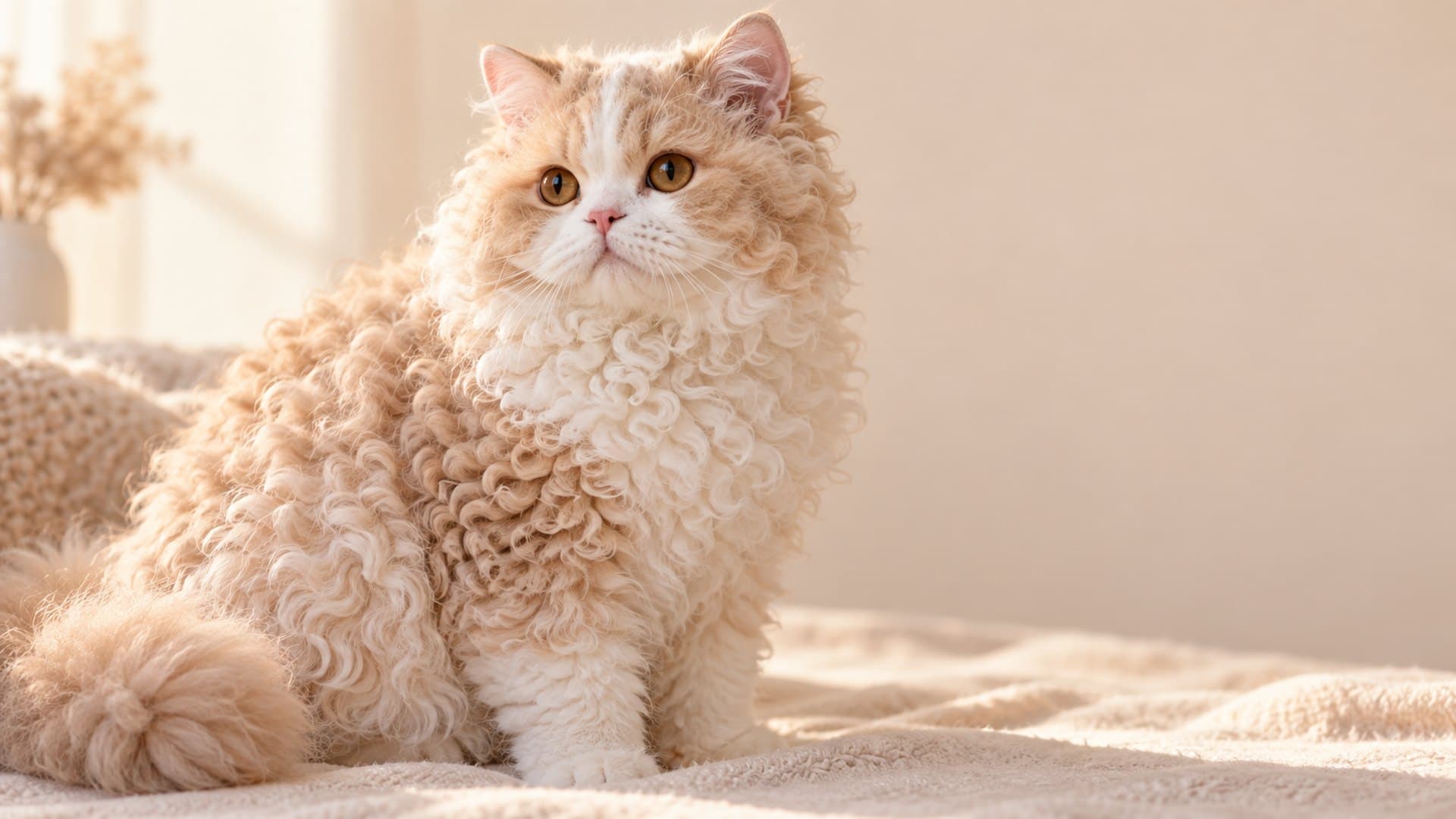
Caring for a Selkirk Rex isn't difficult, but the breed has one particular quirk: the goal is not only to remove dead hair but also to avoid ruining the curls. Too much effort does as much harm as none at all: in the first case the curls straighten, in the second mats appear. Here's how to strike the right balance for short and long coats.
How often to comb
The schedule depends on coat length and on the individual cat:
- shorthaired Selkirks usually need a thorough combing once a week, and some only once every two weeks;
- longhaired Selkirks need it more often, once or twice a week, and if the coat tangles easily, short sessions every few days;
- during the seasonal moult any Selkirk will benefit from extra sessions.
The UK's GCCF warns that combing too often reduces the definition of the curls. So short and regular beats frequent and “until it shines”. A cat will tolerate five calm minutes far better than half an hour of wrestling.
The right tools
A metal comb with widely spaced, round-tipped teeth works best for a curly coat. Slicker brushes and brushes with dense, stiff bristles straighten the curls and leave the coat fluffy but no longer curly. After combing, the CFA suggests simply fluffing the coat with your fingers in a gentle scratching motion, and the curls will spring back.
For a shorthair you can add a rubber grooming mitt: it gently picks up loose hairs without combing out the curls. For a longhair, a comb with finer teeth is also useful for the head, paws and the area behind the ears. Test any tool on your own arm first: if it scratches your skin, it will be unpleasant for the cat too.
Mats: where to look and what to do
In longhaired Selkirks, mats most often form in the armpits, on the belly, between the hind legs, behind the ears and on the britches. Check these areas at every session, even if the coat looks tidy overall. Tease a small mat apart gently with your fingers, a few hairs at a time, holding the hair near the skin so you don't pull on it.
Never cut mats out with scissors: in dense curly fur it is very hard to see where the hair ends and the skin begins, so it is easy to injure the cat. If there are many mats or they are large, see a groomer or your vet.
Does a Selkirk need bathing?
A healthy cat that grooms itself normally usually doesn't need a bath. Some Selkirks, however, develop a greasy coat that clumps together, and in that case the GCCF accepts an occasional bath. A few rules:
- use only a cat shampoo and warm, not hot, water;
- rinse thoroughly so no residue is left on the skin;
- blot the coat with a towel and let it dry in a warm room with no draughts;
- don't brush wet fur, or the curls will straighten.
Many owners notice that the curls look their best after a bath and natural drying. But if the coat gets greasy quickly, or you notice dandruff or itching, see your vet first: it may be a skin problem rather than a feature of the coat.
Ears, eyes and claws
The curls aren't only on the body: Selkirks have curly whiskers and curly hair in their ears. Such ears can collect more wax, so the GCCF recommends giving them attention every week. Clean only the visible part of the ear flap, with a soft cotton pad and a product your vet recommends. Never push cotton buds deep into the ear canal.
If the cat shakes its head, scratches its ears, the ears smell unpleasant or you see dark discharge, take it to the vet, who will find the cause. The same goes for red, watery or squinting eyes.
Trim the claws roughly every two to three weeks, taking off only the clear tip. Don't trim the curly whiskers: the cat needs them to find its way around.
A health check while grooming
The weekly session with the comb is a handy chance to check the cat over: skin, ears, teeth and paw pads. Black specks on the comb may be a sign of fleas, while dandruff, redness, bald patches or lumps are a reason to see the vet. Diagnosis and treatment are always a job for the vet.
The takeaway
A Selkirk needs a wide-toothed comb, light fingers and regularity without obsession. Comb a shorthair once a week or less, a longhair more often, keep an eye on mats and ears, and bath only when the coat really needs it.
There's more about the breed on the breed page, and about these cats' temperament in “Selkirk Rex personality”. Look for available Selkirk Rex kittens, and if there are none right now, join the waiting list.