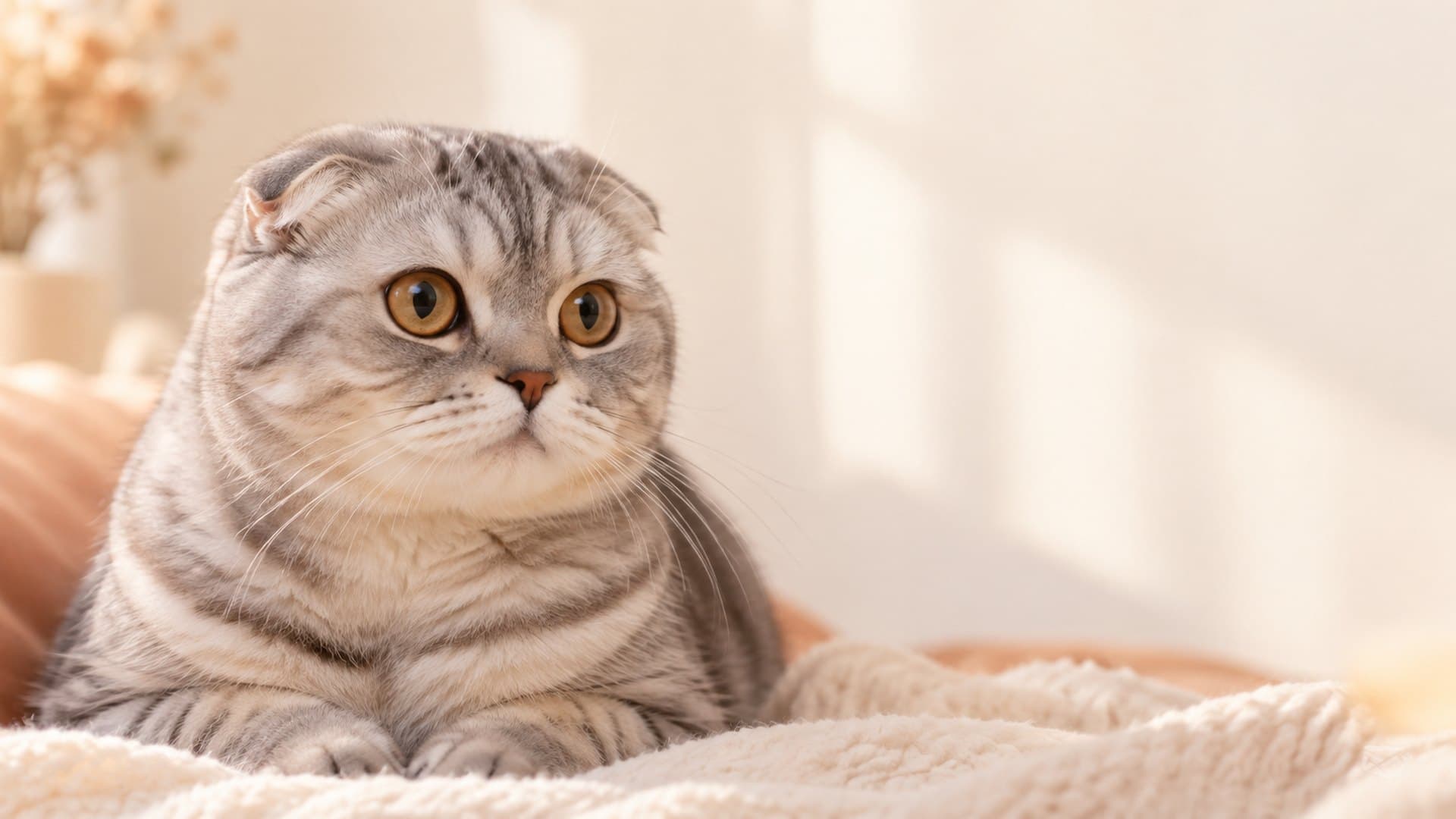

Scottish cat grooming: coat, folded ears and a delicate tail
How to brush short and long Scottish coats, care for folded ears, handle the tail and paws gently, and why weight matters for the joints.
Published 4 min read

Scottish cats aren't a high-maintenance breed: brushing the dense coat once a week is usually enough, and the cat is happy to groom itself. But there are a few things worth knowing in advance, especially if you have a Fold. Folded ears need regular checks, the tail and paws need gentle handling and weight needs careful watching. Here's how to set up a grooming routine that's both useful and pleasant for your cat.
Short and long coats
Scottish cats come in short and long coats; some associations call longhaired Folds Highland Folds. Shorthaired cats have a dense, soft, plush coat with a well-developed undercoat. One thorough brushing a week is usually enough, rising to two or three during seasonal shedding.
Longhaired Scottish cats need more attention. Brush them several times a week, paying special attention to the “trousers” on the hind legs, behind the ears, the armpits and the belly, since that's where mats form most often. Gently tease out a small mat with your fingers, but never cut out large, tight mats with scissors yourself: see a vet or a groomer.
Tools and technique
For basic grooming you'll need:
- a fine-toothed comb for short coats and for checking the skin;
- a wide-toothed comb for long coats;
- a natural bristle brush;
- a rubber grooming mitt, which is great at collecting dead hair.
Brush in the direction of hair growth, from head to tail, in short, calm sessions. Choose tools with rounded teeth and test them on your own hand: if a brush scratches your skin, it won't feel nice to your cat either. A Fold is more comfortable being groomed on your lap or on the floor beside you than on a high, slippery table it has to jump down from.
Get your kitten used to grooming early and a little at a time: a few brush strokes along the back today, an ear check tomorrow, one or two trimmed claws the day after. Follow every session with praise or a treat. That way your cat learns that grooming is calm time together, not an ordeal.
Folded ears: a weekly check
In folded-ear cats, the ear flap partly covers the entrance to the ear, so wax or dirt is harder to spot. Check the ears gently once a week:
- never force the fold open;
- wipe the visible part with a damp cotton pad;
- never put cotton buds into the ear canal;
- only use ear cleaners if your vet recommends them.
Dark discharge, a bad smell, redness, frequent scratching or head shaking are reasons to see the vet. Straight-eared Scottish cats get the same ear checks; it's just easier to do.
Tail and paws: handle with care
Remember that the fold gene affects cartilage and joints, so handle a Fold especially gently:
- never bend, pull or lift the cat by its tail;
- when trimming claws, hold the paw softly without bending it back;
- when picking the cat up, support it under the chest and hind legs.
Trim the claws every 2–3 weeks with proper clippers, avoiding the pink quick. Less active cats wear their claws down more slowly, so they can grow too long; check them regularly. If your cat starts avoiding having its paws or tail touched, or suddenly dislikes claw trimming, it may be a sign of discomfort, so take it to the vet.
Eyes, teeth and bathing
The eyes should be clean and bright. Gently wipe away any small dry discharge in the corners with a damp cotton pad, a fresh one for each eye. Tearing, redness or squinting means a trip to the vet. Brush the teeth with cat toothpaste if your cat is used to it, and have them checked at routine vet visits.
A Scottish cat doesn't need regular baths. If a bath really is necessary, use a cat shampoo and a warm room, and dry the coat thoroughly, because the dense undercoat takes a long time to dry.
Weight and comfort
For a Fold, extra weight means extra strain on the joints. Weigh your cat monthly and feel for the ribs: they should be easy to feel under a thin layer of fat. Measure out portions and serve some of the food in puzzle feeders. Set up your home for comfort too: steps up to the sofa and windowsill, beds with low sides and a litter tray with a low entrance. If your cat starts jumping up to its favourite spots less often, don't put it down to laziness: be sure to mention it to your vet.
You'll find more about the breed on the breed page and in our article “Scottish cat health”. You can check the site to see whether any kittens of this breed are available right now, and if not, join the waiting list.