
Maine Coon myths: raccoons, Vikings and the bigger-is-better idea
Is the Maine Coon really descended from raccoons, do they all love water, and does a DNA test guarantee a healthy heart? We look at popular myths about the breed.
Published 4 min read

Plenty of legends surround the Maine Coon, from romantic tales of Viking ships to confident advice to “feed it more so it grows into a giant”. Some are simply amusing, while others can harm the cat or mislead a family choosing a kitten. We look at the most popular claims and explain what's actually true.
“The Maine Coon is a cross between a cat and a raccoon”
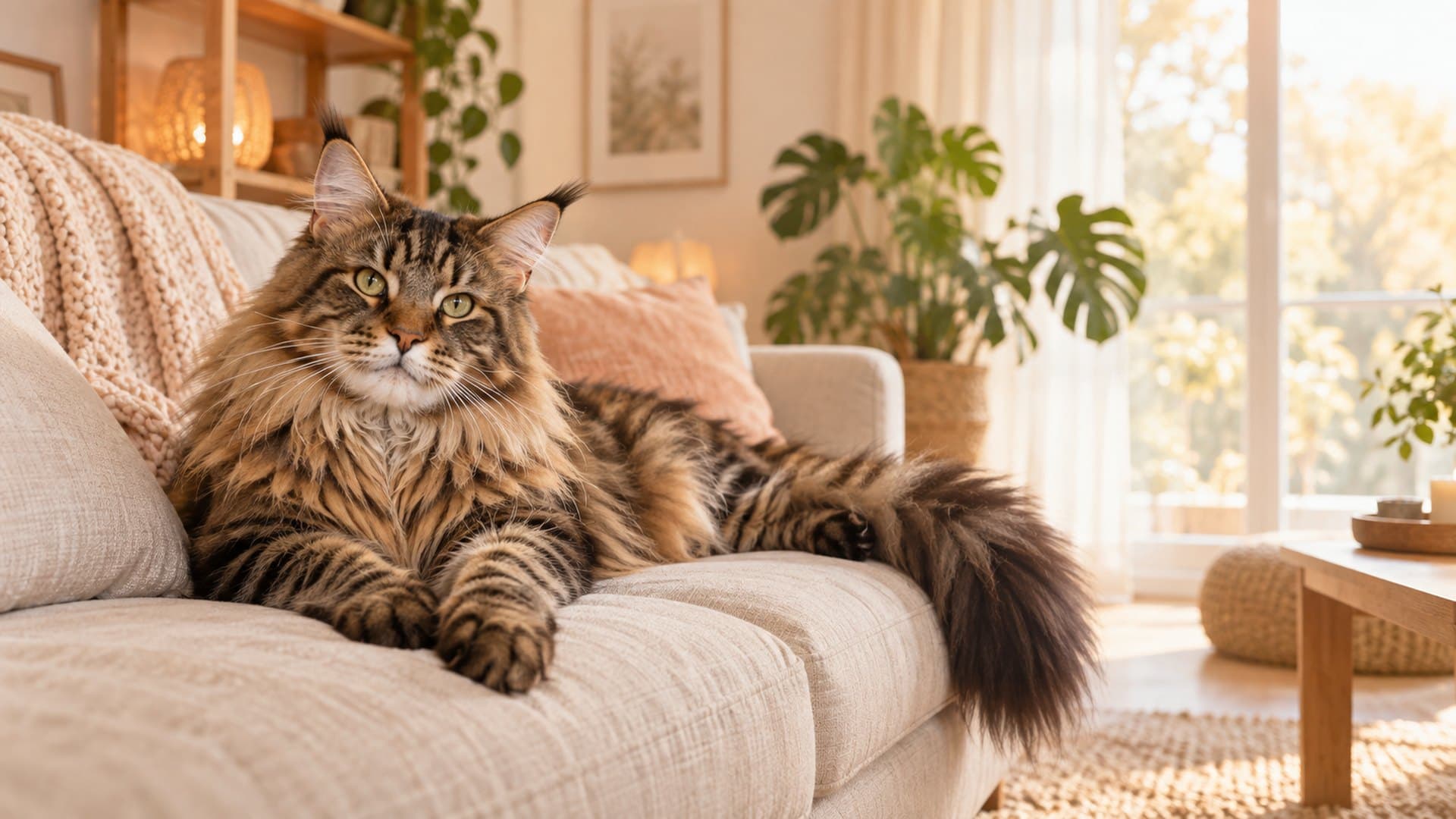
The breed owes its name to this legend: “coon” is short for raccoon. The ringed, bushy tail of brown tabbies really does look a bit like a raccoon's, and many Maine Coons' habit of playing with water using a paw made the story seem more plausible. But cats and raccoons belong to different families of mammals, and they cannot produce offspring together: it's genetically impossible. The American association CFA says so plainly. Another version links the name to a sea captain called Coon who supposedly kept longhaired cats, but that too is just a tale.
“Maine Coons descend from Viking cats or Marie Antoinette's cats”
Two more charming legends. One says Maine Coons descend from cats that sailed to America with the Vikings. The other says they come from Marie Antoinette's Angoras, supposedly shipped across the ocean when the queen was planning to flee France. There is no documentary evidence for either story. Most likely the breed's ancestors were ordinary cats belonging to European settlers and sailors, and Maine's harsh winters and natural selection did the rest. For an owner, something else matters more: its origins in a cold region explain the breed's thick coat, sturdy build and slow development.
“The bigger the Maine Coon, the better”
A Maine Coon's size is set by its genes, not its food bowl. Overfeeding won't make a cat bigger, only heavier, and extra weight strains the joints and heart and shortens the cat's active life. This matters all the more in a breed in which hip dysplasia is not uncommon. Be wary of adverts for “the biggest Maine Coons”, too: chasing record sizes in breeding should never come before health. A healthy cat of average size for the breed is a wonderful Maine Coon.
“Such a big cat is dangerous for children”
Size doesn't make a cat aggressive. Maine Coons are usually described as gentle, patient and good-natured, and many of them get on wonderfully with children. But every cat's temperament also depends on socialisation and on how it is treated. Teach children not to pull the cat's tail and not to lift it without an adult's help: a heavy cat has to be held properly so that neither it nor the child gets hurt. The cat should also have somewhere to retreat from the noise.
“All Maine Coons love water”
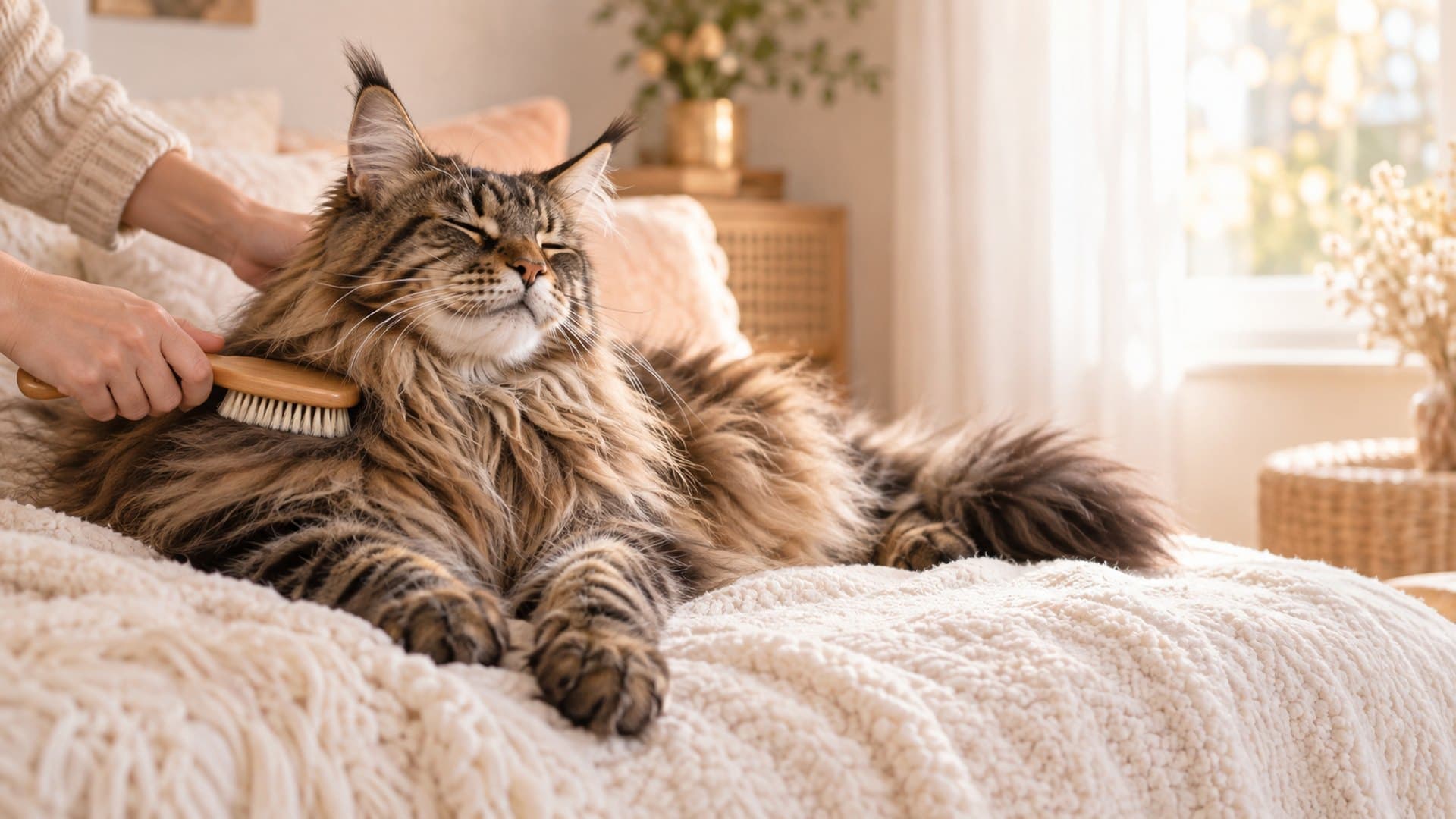
Many Maine Coons really are fascinated by water: they play with drips from the tap, dip a paw into the bowl, come to watch the bath filling up. But this isn't true of every cat, and curiosity about water doesn't mean a love of baths. The thick, water-resistant coat takes a long time to dry, so bath a Maine Coon only when necessary, not because “it likes water”. For coat care, see “Maine Coon coat care”.
“A negative HCM DNA test guarantees a healthy heart”
There is a DNA test for Maine Coons that detects the A31P mutation in the MYBPC3 gene, which is linked to inherited hypertrophic cardiomyopathy. Cats with two copies of the mutation are at much higher risk; cats with one copy are at lower, but not zero, risk. However, this mutation isn't the only cause of the disease: HCM also occurs in cats with no known genetic changes. That's why responsible breeders combine the DNA test with heart scans by a cardiologist and repeat them as the cat gets older. The same applies to other tests: the DNA test for spinal muscular atrophy (SMA), for example, rules out that particular disease but doesn't replace a general health check of the kitten. Questions about a particular cat's heart are always for the vet.
“Maine Coons are hypoallergenic”
No. There's no such thing as a hypoallergenic cat: the main cat allergen, a protein called Fel d 1, is produced by all cats, whatever their coat length or breed. It is made in the sebaceous and salivary glands and ends up on the coat when the cat grooms. Entire (unneutered) males usually produce more of it than females and neutered males. If someone in your family has allergies, talk to a doctor and spend a few hours around adult cats before you decide.
Rely on the standards of cat registries (CFA, TICA, FIFe), publications by veterinary organisations and the advice of the vet who sees your cat. There's more about the breed on the breed page and in “Why is the Maine Coon so big?”. Look for available Maine Coon kittens, and if there are none right now, join the waiting list.