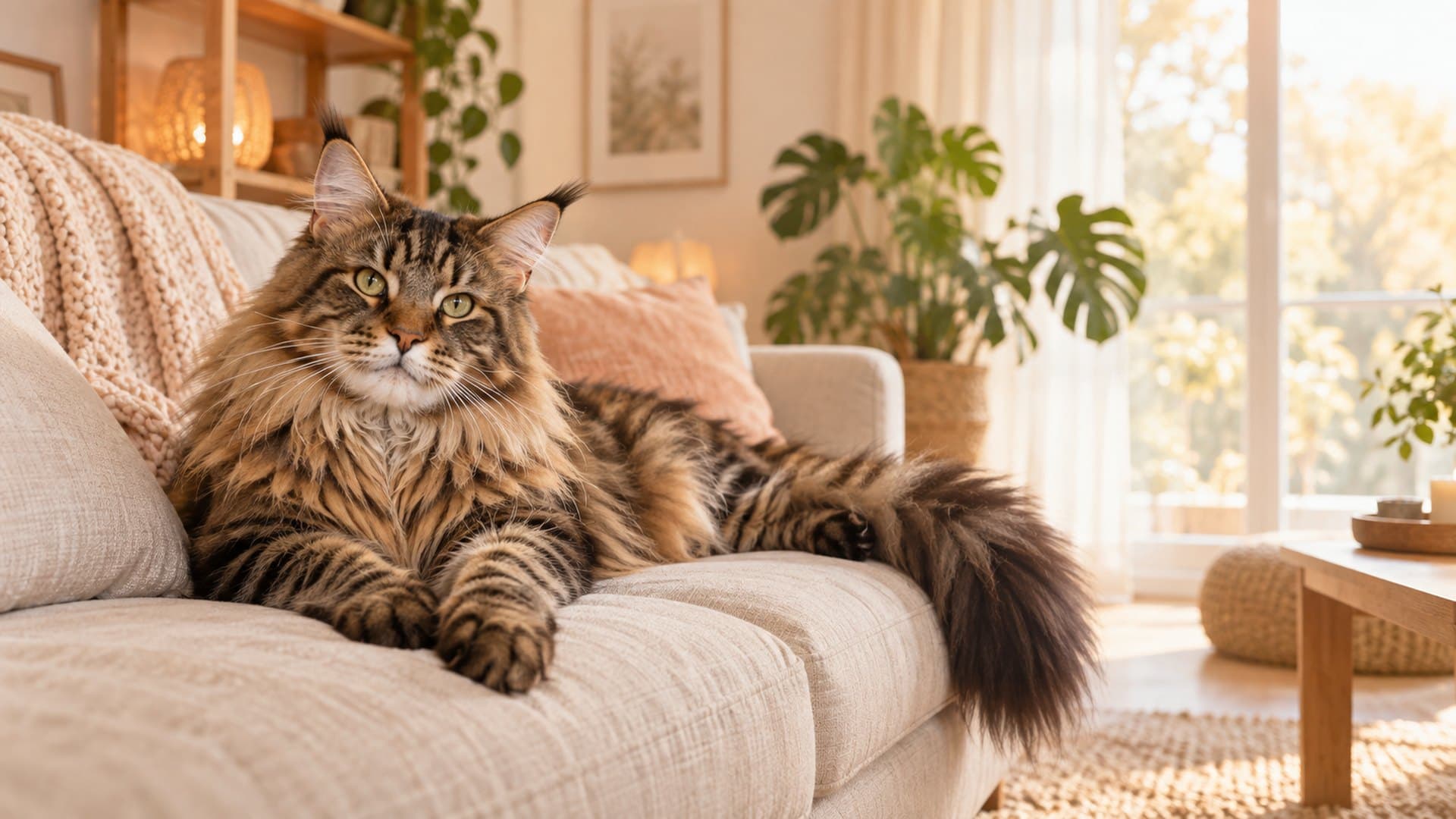

Maine Coon coat care: brushing, mats and bathing
How often to groom a Maine Coon, which tools to choose, where mats usually form, how to handle the moult and whether a gentle giant needs a bath.
Published 4 min read
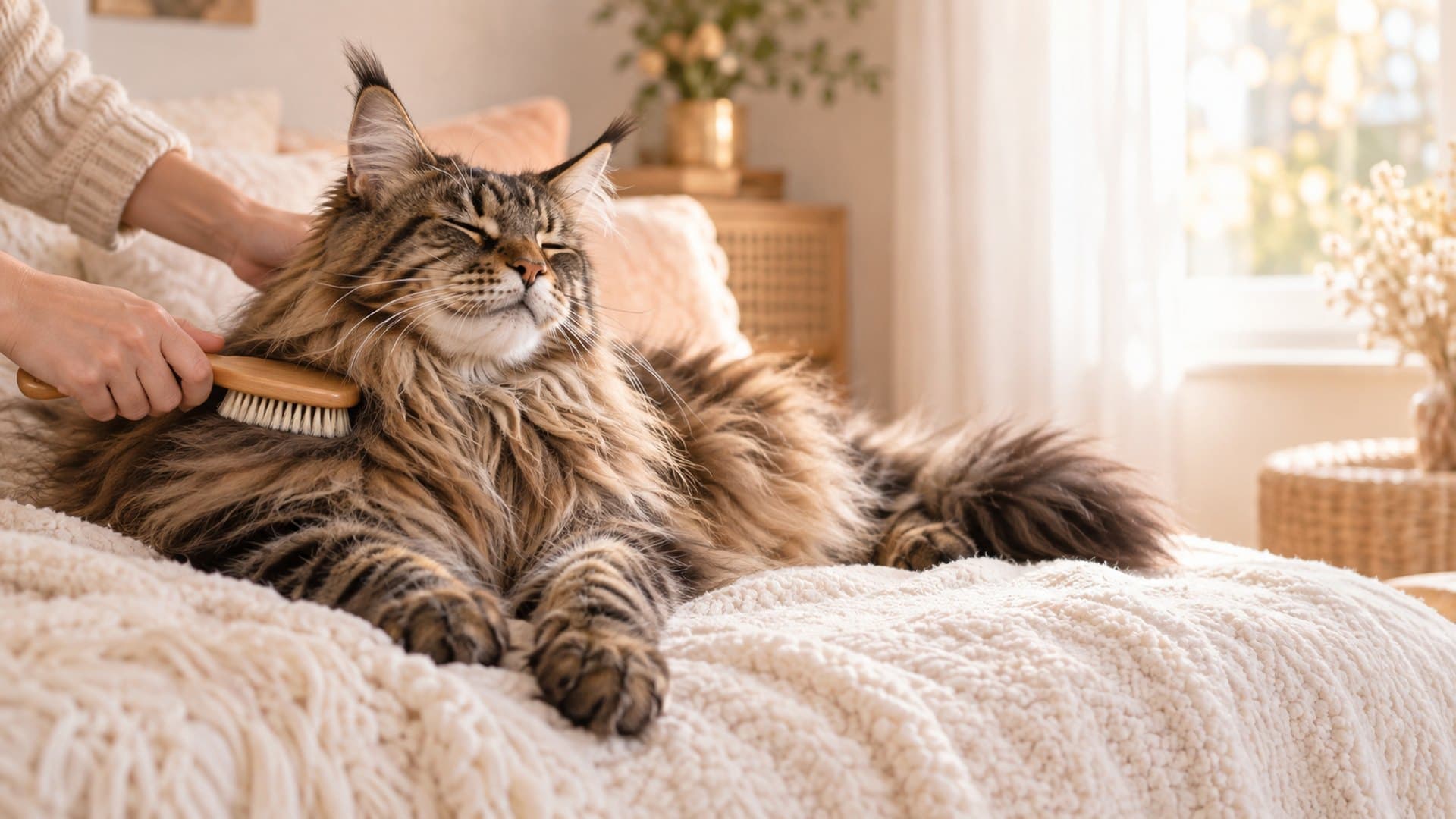
A Maine Coon's coat is proper winter clothing: thick, shaggy and water-resistant, with a full ruff and britches. The good news is that it is less prone to matting than the coats of many other longhaired breeds. But “less” doesn't mean “never”: without regular care, a big cat soon develops tangles in the places it can't reach itself. Here's how to look after the coat without stress for the cat or for you.
What the coat is like
A Maine Coon's coat is uneven in length: shorter on the head and shoulders, longer on the back, belly, britches and tail. Beneath the long guard hairs lies a soft undercoat. That undercoat is what mats most often, especially where the fur rubs as the cat moves: in the armpits, on the belly and between the hind legs. Coat density changes with the season: it is noticeably fuller in winter, and in spring the cat sheds the excess.
Texture also varies from cat to cat: some have silky fur that hardly tangles, others have a softer, cottony coat that needs more attention. So it's worth adjusting the grooming routine to your own cat.
How often to groom
The American CFA recommends combing a Maine Coon two or three times a week for five to ten minutes. The UK's GCCF considers weekly grooming enough, with extra attention during the spring moult. In practice:
- most cats manage well with two short sessions a week;
- during the seasonal moult, more often, sometimes daily;
- cats with a soft, cottony coat need more attention than those with coarser guard hairs.
Five calm minutes a few times a week is far better than a big grooming session once a month. Start getting your kitten used to the comb as early as possible: a few strokes along the back, a treat, and a little more next time.
Tools
You don't need a big kit. For long coats, International Cat Care recommends a wide-toothed metal comb and a rubber grooming mitt. A comb with finer teeth is handy for the head and legs. De-shedding tools for the undercoat help during the moult, but use them carefully and not too often so you don't damage the guard hairs or the skin. Test any tool on your own arm: if it scratches you, it will be unpleasant for the cat too.
Technique and trouble spots
Comb section by section, from the tips towards the roots, holding the hair close to the skin so you don't pull. Pay particular attention to:
- the armpits and belly, where the skin is thin and sensitive;
- the britches and the area around the tail, where fur can get soiled after using the litter tray;
- behind the ears and the ruff;
- between the toes, where tufts of fur grow.
Tease a small mat apart gently with your fingers, a few hairs at a time. Never cut mats out with scissors: in thick fur it's very easy to cut the skin. If there are many mats or they are large, see a groomer or your vet.
Does a Maine Coon need bathing?
A healthy cat that grooms itself usually doesn't need a bath. Maine Coons are sometimes bathed before shows or if the coat gets dirty or greasy, especially on the britches and tail. If you do bath your cat:
- comb it thoroughly beforehand, because water only tightens mats;
- use only a cat shampoo and warm water, and rinse well;
- towel-dry the coat and keep the cat in a warm room until it's completely dry, as the dense undercoat takes a long time to dry.
Don't shave the cat “for the heat”: the coat helps it both keep warm and avoid overheating. Clipping is only appropriate for specific reasons, such as large mats, and should be done by an experienced groomer or a vet.
Moulting and hairballs
During the moult, especially in spring, a lot of hair comes out, and the cat swallows more of it while grooming. Frequent combing at this time reduces the amount of hair that ends up in the stomach, and on your furniture. If the cat often brings up hairballs, retches without producing anything, is constipated or has lost its appetite, take it to the vet, who will find the cause and advise you. Don't give any hairball remedies without talking to your vet first.
A health check while grooming
Every session is a chance to check the cat over: ears, eyes, claws, teeth and skin. Look out for black specks on the comb (these may be signs of fleas), dandruff, redness, bald patches or lumps. Maine Coon claws are large and strong, so trim the clear tips roughly every two to three weeks. If anything worries you, see your vet: diagnosis and treatment are their job.
There's more about the breed on the breed page and in “Maine Coon personality”. Look for available Maine Coon kittens, and if there are none right now, join the waiting list.