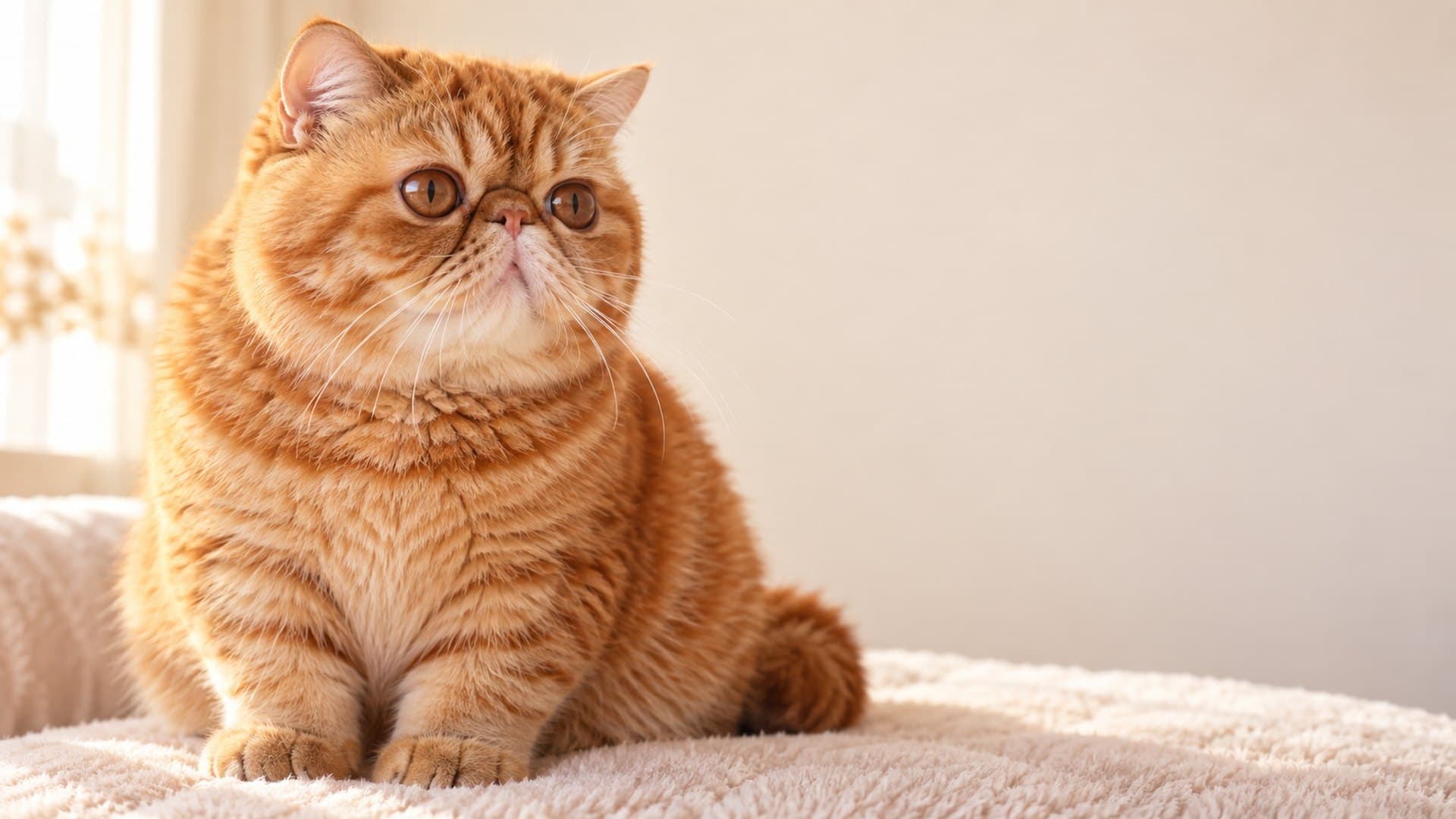

Exotic Shorthair health: screening and questions for breeders
Health questions and screening to discuss before bringing home a Exotic Shorthair.
Published 3 min read

The Exotic Shorthair is a sturdy Persian-type cat with a shorter, dense plush coat. Its rounded face calls for attentive yet gentle care. Breed-related risks are reasons to ask precise questions, not to fear every symptom. A veterinarian must assess the health of an individual cat.
What to watch for
Cats with very shortened faces can have breathing, eye and dental difficulties. In related Persian lines, asking about polycystic kidney disease (PKD) also matters; assess the particular risk through family records and examination. Predisposition is not a diagnosis: family history, screening results and the individual cat's condition all matter.
Parental tests and screening
Ask the breeder about the parents' breathing and eye health, dental examinations and relevant PKD testing in the line. Review written results with a veterinarian. No breed comes with a health guarantee. Ask about parental screening, relevant test results, rearing conditions and the kitten's own veterinary records. A DNA test answers a question about a particular gene variant; it does not replace a clinical examination. Ask for written results rather than a verbal assurance that everything is fine.
The kitten's health
Ask for veterinary records and details of age-appropriate examinations, vaccinations and parasite control already completed. Observe how the kitten moves, breathes, eats and responds to people. Agree its future care plan with your veterinarian.
Reasons for an unscheduled visit
Breathing difficulty, fainting, marked lethargy, pain, refusal to eat or a sudden change in gait need prompt veterinary assessment. Do not diagnose a cat from photographs or forum advice.
The long view
Offer quiet beds, a cool place in hot weather, safe low climbing routes and daily play. If the cat snores, breathes with effort or tires quickly, seek veterinary advice. Every cat needs a predictable routine, a clean litter tray, fresh water, places to rest and somewhere to hide. Even a sociable cat must be free to end an interaction. Children should learn not to wake an animal or hold it against its will. Regular preventive check-ups can catch changes that are easy to miss at home.
What to watch at home
Note unusual changes in eating, movement, litter habits, sleep and breathing at rest. These observations help a vet understand a pattern, but do not let an owner make a diagnosis alone. If a sign is sudden or severe, seek help rather than waiting for a scheduled visit.
The plush coat is shorter than a Persian's, but its thick undercoat can tangle without regular brushing. Check the skin and gently clean around the eyes if discharge appears. Exotic Shorthairs usually enjoy moderate play with quiet breaks. Brief daily sessions support movement, while excess weight can make ordinary life harder. Offer quiet beds, a cool place in hot weather, safe low climbing routes and daily play. If the cat snores, breathes with effort or tires quickly, seek veterinary advice.
When meeting the breeder, ask for veterinary records and a description of the kitten’s usual routine. Prepare questions in advance and note the answers so you can compare them calmly with your own circumstances. After the move, change the household routine gradually and keep familiar places for sleeping, eating and play. No breed comes with a health guarantee. Ask about parental screening, relevant test results, rearing conditions and the kitten's own veterinary records. A DNA test answers a question about a particular gene variant; it does not replace a clinical examination.
Review test results with a veterinarian: a negative result for one known variant does not rule out every condition, while a positive result does not always predict symptom severity. Ask when and by whom the screening was done, whether both parents have records, and how often clinical checks should be repeated. Keep copies after the move and give them to your own vet. Assess the individual kitten as well as its breed background. Also ask whether the cat breathes freely during play and restful sleep.
Read more on the breed page. Check the site for available kittens; if none are available now, you can join the waiting list.