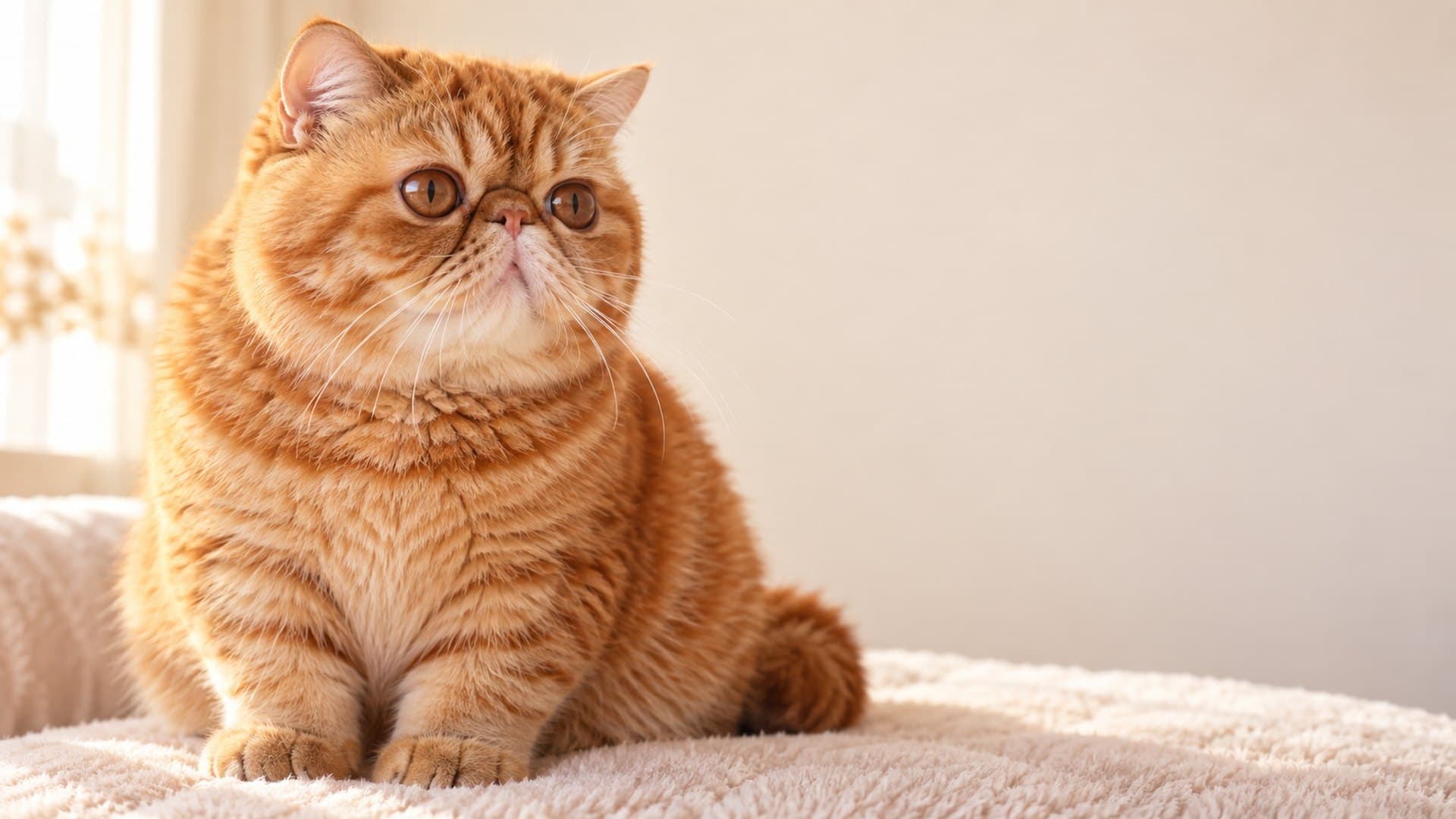

Myths about Exotics: the truth about the “shorthaired Persian”
Do Exotics really not shed, need no grooming and suit allergy sufferers? Where do longhaired kittens come from, and is snuffling normal? We check the myths.
Published 4 min read

Exotics are loved for their plush coats and teddy-bear faces, and a lot of ideas have grown up around the breed, from charming to downright risky for the cat. We've gathered six common myths and looked at each one: what's true and what you really need to know before bringing a kitten home.
“An Exotic is just a Persian with a haircut”
The truth: the Exotic is a separate, recognized breed. CFA recognized it back in 1967, and FIFe in 1983. The Exotic's short coat is a genetic trait, not a trim: short hair is dominant over long, which is why it appeared in the very first generation of Persian × American Shorthair crosses. In body and head type, the Exotic standard really is almost identical to the Persian one; the difference is the coat, which is short, dense and plush with a thick undercoat. So the resemblance to the Persian is the whole idea of the breed, not an accident.
“Short coat, so hardly any grooming”
The truth: there's less grooming than with a Persian, but it's still needed. Exotics have a dense undercoat, and CFA warns that they shed noticeably, mostly seasonally. A thorough combing once a week is usually enough, with more during shedding. On top of that, an Exotic's eyes, like a Persian's, need wiping every day because of tear overflow, and the fold above the nose needs regular attention. More in “Exotic care”.
“Exotics don't shed and are fine for allergy sufferers”
The truth: neither is true. Exotics shed, sometimes heavily. And the main cat allergen, the protein Fel d 1, is produced mostly in the skin's sebaceous glands and ends up on the fur, partly through saliva when the cat grooms. All cats produce it, and according to the available data, coat length doesn't affect how much. The amount varies more from cat to cat: for example, intact males produce more than neutered ones. There are no hypoallergenic breeds. If someone in your family has allergies, talk to an allergist and spend time around cats before getting a kitten.
“Two Exotics always have shorthaired kittens”
The truth: not always. After years of crossing with Persians, many Exotics carry a hidden longhair gene; it's recessive and doesn't show in the cat itself. If both parents are carriers, roughly one kitten in four may be born longhaired. These kittens look like Persians, and depending on the registry they're recorded as Persians or as longhaired Exotics. It's not a sign of an “impure” breed, just ordinary inheritance.
“Exotics are lazy and don't play”
The truth: Exotics are calm, not indifferent. CFA notes that some people consider them even a bit more playful than Persians. A wand toy, a ball or a cardboard box, and an Exotic will happily join in, then just as happily doze off next to you. Daily activity is good for them, since calm cats easily put on weight. Just remember that a flat-faced cat needs breaks: keep play sessions short, especially in hot weather.
“Snuffling and snoring are cute and normal”
The truth: noises when breathing mean that air is struggling to get through narrowed nostrils or airways. In a 2021 Swedish study, 86% of the show Persians and Exotics examined had moderately or severely narrowed nostrils, yet the owners of only 6 of the 76 cats had noticed breathing problems at least once a week. Noisy breathing, open-mouth breathing, or breathlessness after play or in the heat are reasons to take your cat to a vet. When choosing a kitten, look for open nostrils and quiet breathing.
How not to fall for a myth
Check information against the breed standards of cat registries (CFA, FIFe, GCCF), International Cat Care and your vet's advice. For a particular kitten, ask the breeder how the parents breathe and behave, which tests they've had and how the kitten plays. An honest breeder will tell you about both the breed's strengths and its weak spots.
Promotional descriptions often highlight only attractive traits, so ask for a real example. How does the cat respond to visitors? How does it handle a short period alone? What care does this particular coat need? Discuss difficulties before choosing a kitten rather than after the move. An honest answer may differ from an appealing breed stereotype, and will help you prepare the home and routine.
Learn more about the breed on the breed page. Available kittens, if there are any, are among our kittens of the breed; if there are none right now, join the waitlist.