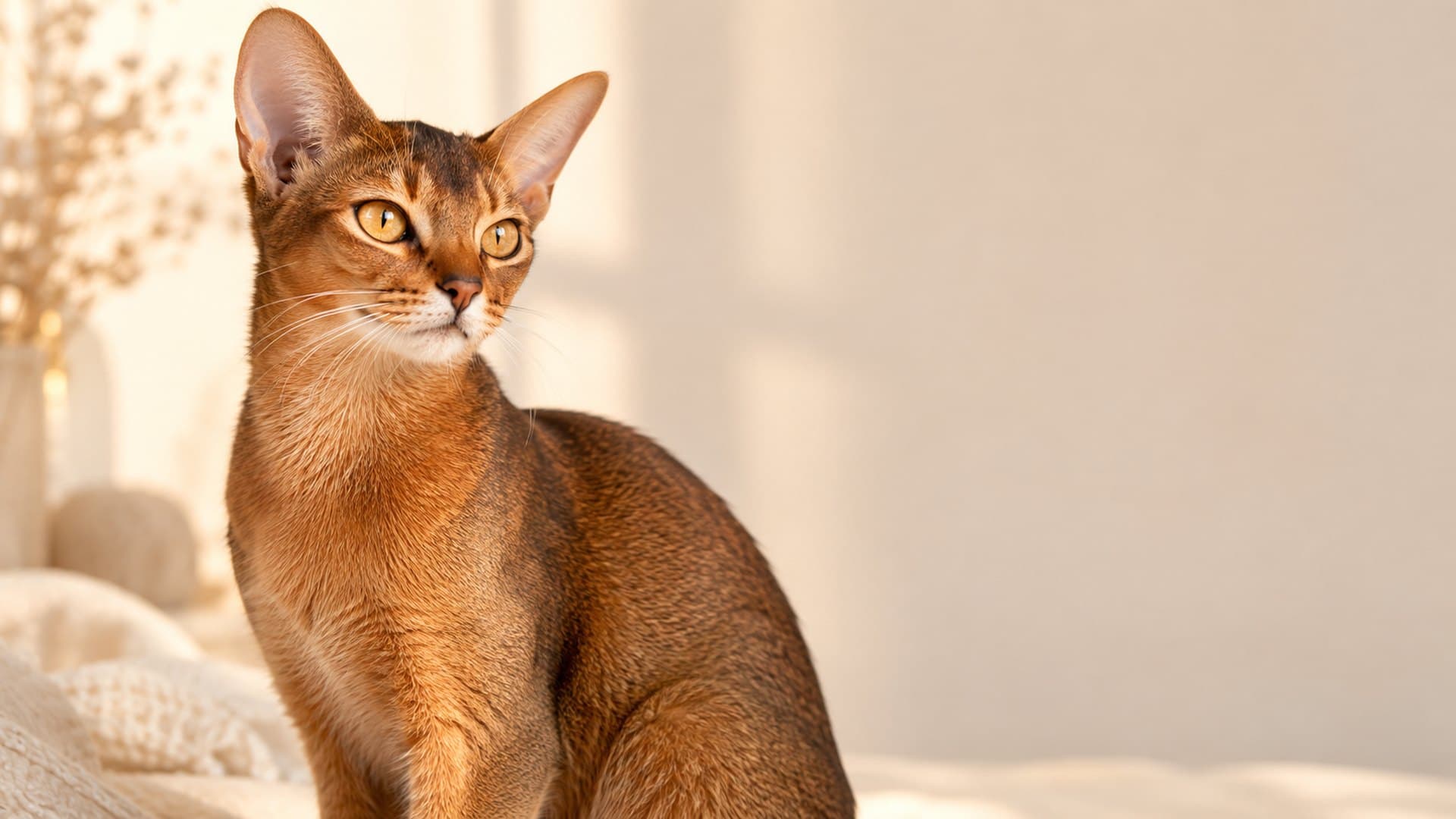

Abyssinian health: DNA tests and what to ask the breeder
Pyruvate kinase deficiency, retinal atrophy, amyloidosis and gums: which inherited problems are known in the breed, which tests exist and what to check.
Published 4 min read

Abyssinians are sturdy, active cats that often live a long time with good care: the UK's Governing Council of the Cat Fancy (GCCF) gives a lifespan of 12–16 years or more. At the same time, several inherited problems are known in the breed, and DNA tests exist for some of them. The point of knowing about them is not to worry, but to ask the breeder the right questions. This article is background for choosing a kitten, not medical advice: diagnosis and treatment are always a matter for your vet.
Pyruvate kinase (PK) deficiency
Pyruvate kinase is an enzyme that provides energy to red blood cells. When it is lacking, red blood cells have a shorter life and break down, leading to haemolytic anaemia. The condition was first described in 1992, in an Abyssinian, and was later found in Somalis and in a small number of non-pedigree cats.
It varies enormously: some cats never show symptoms, while others have recurring episodes of lethargy, pale gums, poor appetite and weight loss. Inheritance is autosomal recessive: a cat is affected if it inherits the altered gene from both parents, while a carrier with one copy is healthy but can pass the gene on to its kittens. That is why breeding cats are DNA-tested, as a carrier looks no different from any other cat. The EveryCat Health Foundation clearly recommends testing all Abyssinians and Somalis intended for breeding.
Progressive retinal atrophy (PRA)
PRA is a group of inherited diseases in which the retina, the light-sensitive layer at the back of the eye, gradually degenerates. It is not painful, but vision slowly worsens and can end in blindness. Two forms are known in Abyssinians, and there are DNA tests for both:
- rdAc (CEP290 gene): a late-onset form. Kittens are born sighted, the first signs usually appear at 1.5–2 years, and over time the cat may lose its sight completely. It is inherited recessively, so the status of both parents matters;
- Rdy (CRX gene): an early-onset form known in Abyssinians and Somalis, with changes visible in kittens just a few weeks old. One copy of the gene is enough to cause the disease, so affected cats are not bred from.
There is no treatment for PRA, but International Cat Care points out that most cats adapt well to vision loss as long as everything at home stays in its usual place.
Renal amyloidosis
Amyloidosis is the build-up of an abnormal protein called amyloid in the body's organs. In some Abyssinians it collects mainly in the kidneys and can lead to chronic kidney failure at a relatively young age. The condition runs in families, but the way it is inherited is still unclear and there is no DNA test. So what helps here is a breeder who is open about the health of their lines, plus regular check-ups: if your vet recommends it, blood and urine tests can be used to monitor kidney function. Signs such as increased thirst, frequent urination, weight loss or poor appetite usually appear only once the disease is advanced, so routine check-ups matter even for a cat that seems perfectly healthy.
Gums, teeth and kneecaps
The GCCF recommends regular dental checks with a vet for Abyssinians, as tartar and gingivitis are common in the breed. Daily toothbrushing at home is the best prevention.
International Cat Care also notes that a slipping kneecap (patellar luxation) appears to be more common in Abyssinians and Devon Rex cats. Pay attention if your cat limps, suddenly hops on three legs or becomes reluctant to jump.
Blood group
Unlike many other cats, Abyssinians and Somalis fairly often have blood group B. This matters in two situations: before a blood transfusion (your vet will check the blood group) and in breeding, because mating a group B queen with a group A tom can cause a dangerous reaction to the mother's colostrum in the kittens. Responsible breeders know their cats' blood groups. For a pet owner, it is simply a useful note in the vet passport.
What to ask the breeder
Before reserving a kitten, do not hesitate to ask:
- whether the parents have been DNA-tested for pyruvate kinase deficiency, PRA rdAc and Rdy, and whether you can see the results with each cat's microchip number;
- whether there have been cases of kidney failure at a young age in the line;
- what the parents' blood groups are;
- how the breeder looks after their cats' teeth;
- which vaccinations and parasite treatments the kitten has already had, and what is recorded in its vet passport.
A good breeder answers questions like these calmly and with paperwork to hand. Once your kitten has moved in, agree a plan of preventive check-ups with your vet: one visit a year is usually enough for a young cat, and the vet will advise on frequency as your cat gets older.
When you are ready, browse the kittens of this breed and the overview on the breed page. If there are no kittens available right now, join the waiting list.