
Caring for an Abyssinian: coat, teeth, ears and claws
The short ticked coat takes almost no effort, but an Abyssinian's teeth deserve special attention. A simple weekly care plan.
Published 4 min read

The Abyssinian is often called a cat that looks after itself, and as far as the coat goes, that is nearly true. But care is about more than a comb. For this breed, teeth, claws and a regular once-over matter just as much, because that is how you spot changes early. Here is a simple plan that takes a few minutes a week.
The coat: little work, lots of shine
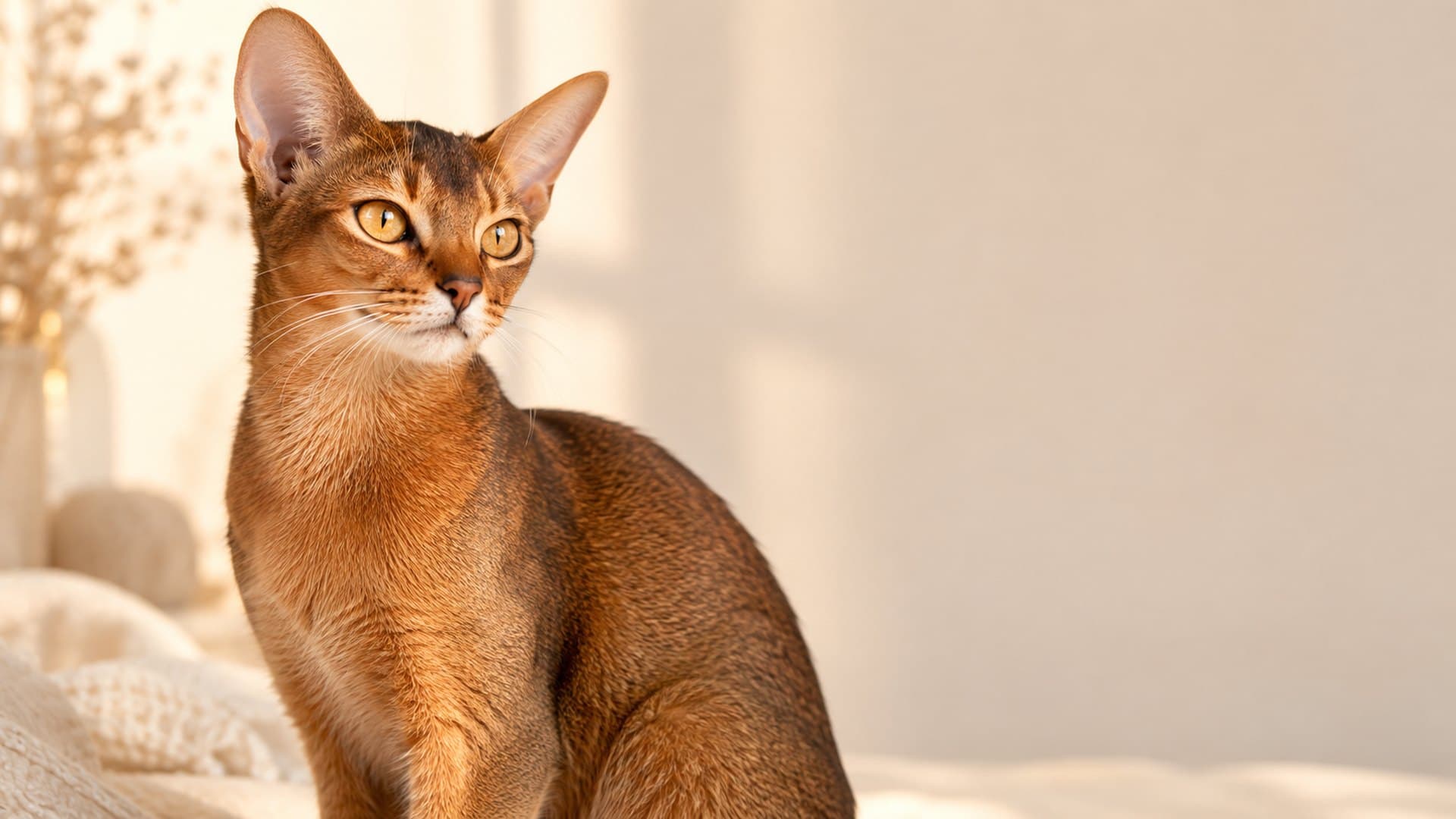
The Abyssinian's short ticked coat is dense and springy, lies close to the body and almost never mats. The Cat Fanciers' Association (CFA) recommends combing or brushing a few times a month to keep shedding under control. Many owners do it weekly, not because the coat needs it but because it is a pleasant ritual and a chance to check the cat over.
Abyssinians shed like all cats, especially in spring and autumn. The short hair is just less noticeable on furniture and clothes. During a moult, add one or two extra short sessions a week so that less hair ends up in the cat's stomach when it grooms.
A ticked coat is also a good indicator of a cat's general condition. A dull, dry or brittle coat, dandruff or bald patches are reasons to see the vet: diet, skin problems and stress can all play a part.
Tools and technique
For short coats, International Cat Care recommends a fine-toothed comb, a natural bristle brush and a rubber grooming glove. The routine is simple:
- comb in the direction of hair growth from head to tail, checking for black specks that can be a sign of fleas;
- gather up loose hairs with the rubber glove;
- for shine, wipe the coat with a piece of chamois or a silk scarf; the CFA mentions a chamois as an easy way to bring out the glow of the ticking.
Keep sessions short and pleasant. Abyssinians find it hard to sit still for long, so five calm minutes with a treat at the end beat half an hour of persuasion. Never hold a cat down: it should know it can leave.
Baths only when needed
A healthy Abyssinian does not need baths: it manages perfectly well on its own, and most cats tolerate bathing poorly. A bath may be necessary if the cat gets something on its coat that it must not lick off, or before a show. In that case use only a cat shampoo and warm water, then dry the cat thoroughly in a warm, draught-free room.
Teeth: the most important item
For Abyssinians, teeth are arguably the most important part of routine care. The UK's Governing Council of the Cat Fancy (GCCF) recommends regular dental checks with a vet to catch tartar and gingivitis (inflamed gums) early. International Cat Care considers daily toothbrushing the best way to keep teeth and gums healthy.
It is best to start young and go step by step:
- first, stroke the cat's face and lips and reward it;
- let it lick a little cat toothpaste off your finger;
- next, apply toothpaste to the back teeth with a cotton bud, then move on to a cat toothbrush;
- start with 10 seconds per side and build up gradually to 30.
Human toothpaste is not suitable for cats. If you notice bad breath, red or bleeding gums, tartar, or your cat starts eating cautiously, take it to the vet.
Claws, ears and eyes
Abyssinians climb and jump a lot, so scratching posts should be tall, sturdy and placed in several spots, with both vertical and horizontal surfaces. Claws usually wear down naturally, but if they catch on fabric you can trim the tips carefully with proper cat clippers, avoiding the pink quick with its blood vessels. As with the brush, it is best to start young: touch the paws during play, press gently on a pad so the claw extends, and reward the kitten.
Check those large ears once a week: inside they should be clean, with no dark debris or unpleasant smell. There is no need to clean deep inside the ear. The eyes should be bright and free of discharge. Dark discharge, redness, itching or frequent head shaking are reasons to see a vet.
A health check every time
Every grooming session doubles as a mini health check. Look at the skin, the paw pads, any lumps and any areas the cat will not let you touch. If you notice changes, do not look for remedies yourself: diagnosis and treatment are a job for the vet. A simple care diary helps: note the dates of grooming, toothbrushing and claw trims, plus anything that seemed unusual. It will come in handy at the vet's too.
Find out more on the breed page. You can browse available kittens of this breed, and if there are none right now, sign up to the waiting list.