

Breed traits and origins: what defines the Siberian cat
The origins and defining features of the Siberian cat: what to know before choosing a kitten.
Published 3 min read
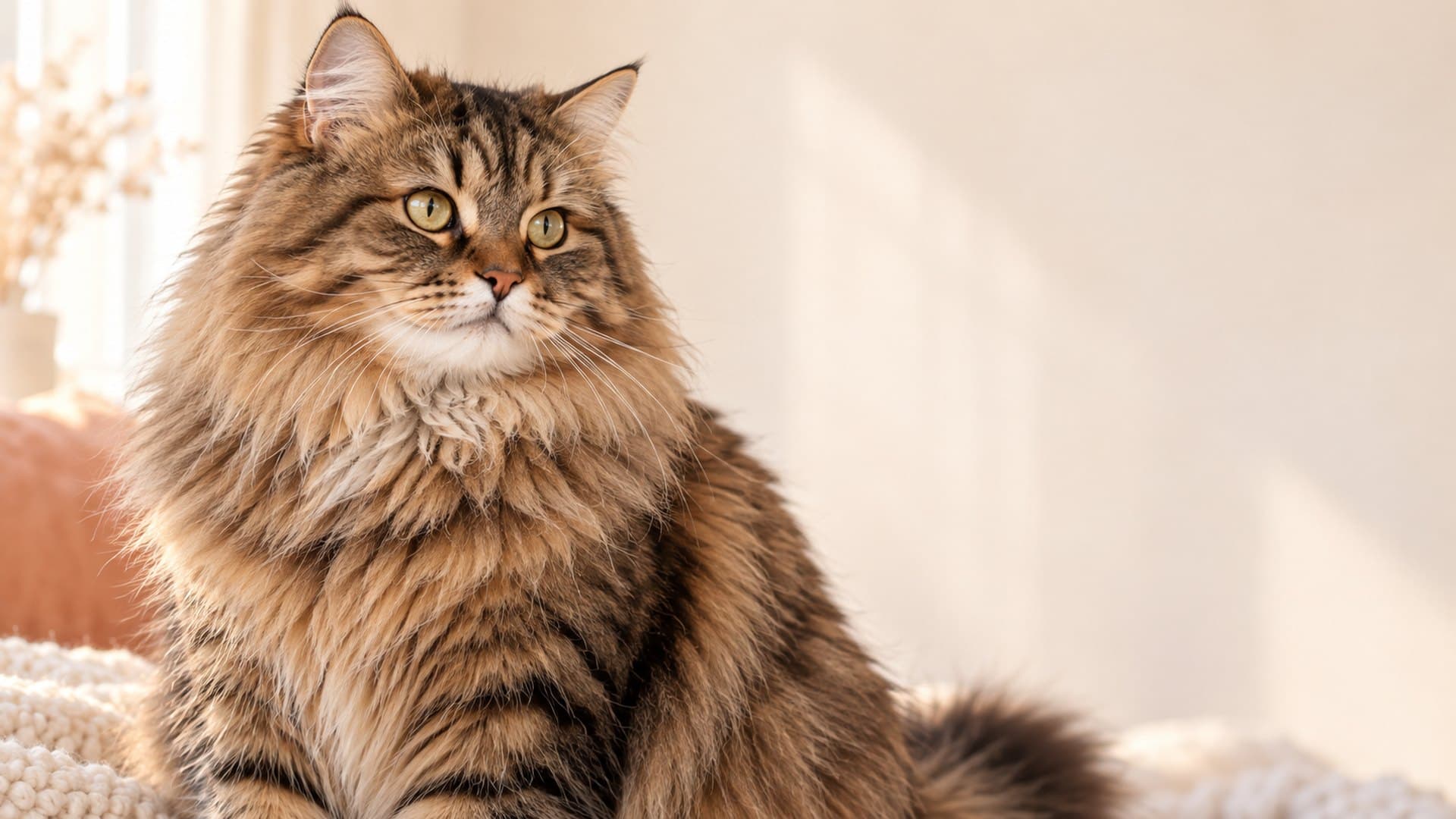
The Siberian is a robust semi-longhaired cat with a dense triple coat, full tail and active character. Its gentle expression should not mislead you: this is a curious, powerful animal. To understand this breed, look at its origins, build and behaviour together. One visual feature can never tell the whole story of a cat.
Origins
The breed developed from cats that lived in Russia over many generations. Its dense coat suits a cold climate, but modern pet Siberians live in warm homes and do not need outings in freezing weather. Breed standards describe an ideal type, but a living cat is not a show diagram. Health, socialisation and welfare matter at least as much to a future family.
The recognisable features
The Siberian is recognised by its strong body, rounded outlines, dense triple coat and full adult ruff. Kittens mature slowly, and seasonal coat thickness changes noticeably. The thick coat has several layers and protects the body well, but can mat on the belly, under the legs and near the tail. It is fuller in winter, with potentially heavy spring shedding. Age matters too: a kitten can look quite different from a mature example of its breed.
Beyond appearance
Many Siberians form close bonds with their families, watch people carefully and join in household life. They can be gentle and patient, while still needing their personal space respected. A strong body enjoys climbing, jumping and exploratory games. Provide a stable tree, high resting places and brief shared games each day so energy has a safe outlet. Choosing solely by a photo or coat colour therefore misses much of what daily life will be like.
Questions for a breeder
No breed comes with a health guarantee. Ask about parental screening, relevant test results, rearing conditions and the kitten's own veterinary records. A DNA test answers a question about a particular gene variant; it does not replace a clinical examination. Ask to see adult relatives, hear about the particular line and learn how the kittens become used to people and household sounds.
Life at home
A Siberian can thrive in a flat with vertical routes, a stable scratching post and a quiet resting area. Furniture should be sized for the strength and weight of an adult cat. Before choosing a kitten, spend time watching it in a calm setting. Ask the breeder about its habits, response to unfamiliar people and daily routine. A breed description helps you ask better questions, but it cannot replace meeting the individual cat.
Breed type in everyday life
A recognisable appearance helps describe a breed, but does not show how comfortably a cat lives. Watch the animal move, breathe and rest, rather than focusing only on head shape or coat colour. Ask which traits breeders have selected in the family line and how they assess both health and behaviour.
With gradual introductions, Siberians often live well with children and other animals. Children need to learn a cat's signals, and visitors should not pursue it when it chooses to hide. Like other cats, Siberians can develop heart and other conditions; a breed name is no health guarantee. Pay attention to family history, veterinary checks and unusual changes in breathing or activity. A Siberian can thrive in a flat with vertical routes, a stable scratching post and a quiet resting area. Furniture should be sized for the strength and weight of an adult cat. A strong body enjoys climbing, jumping and exploratory games. Provide a stable tree, high resting places and brief shared games each day so energy has a safe outlet.
When meeting the breeder, ask for veterinary records and a description of the kitten’s usual routine. Prepare questions in advance and note the answers so you can compare them calmly with your own circumstances. After the move, change the household routine gradually and keep familiar places for sleeping, eating and play. No breed comes with a health guarantee. Ask about parental screening, relevant test results, rearing conditions and the kitten's own veterinary records. A DNA test answers a question about a particular gene variant; it does not replace a clinical examination.
Read more on the breed page. Check the site for available kittens; if none are available now, you can join the waiting list.


