
Common Siberian cat myths: what is true and what is not
Common Siberian cat myths, with the facts separated from exaggeration.
Published 4 min read

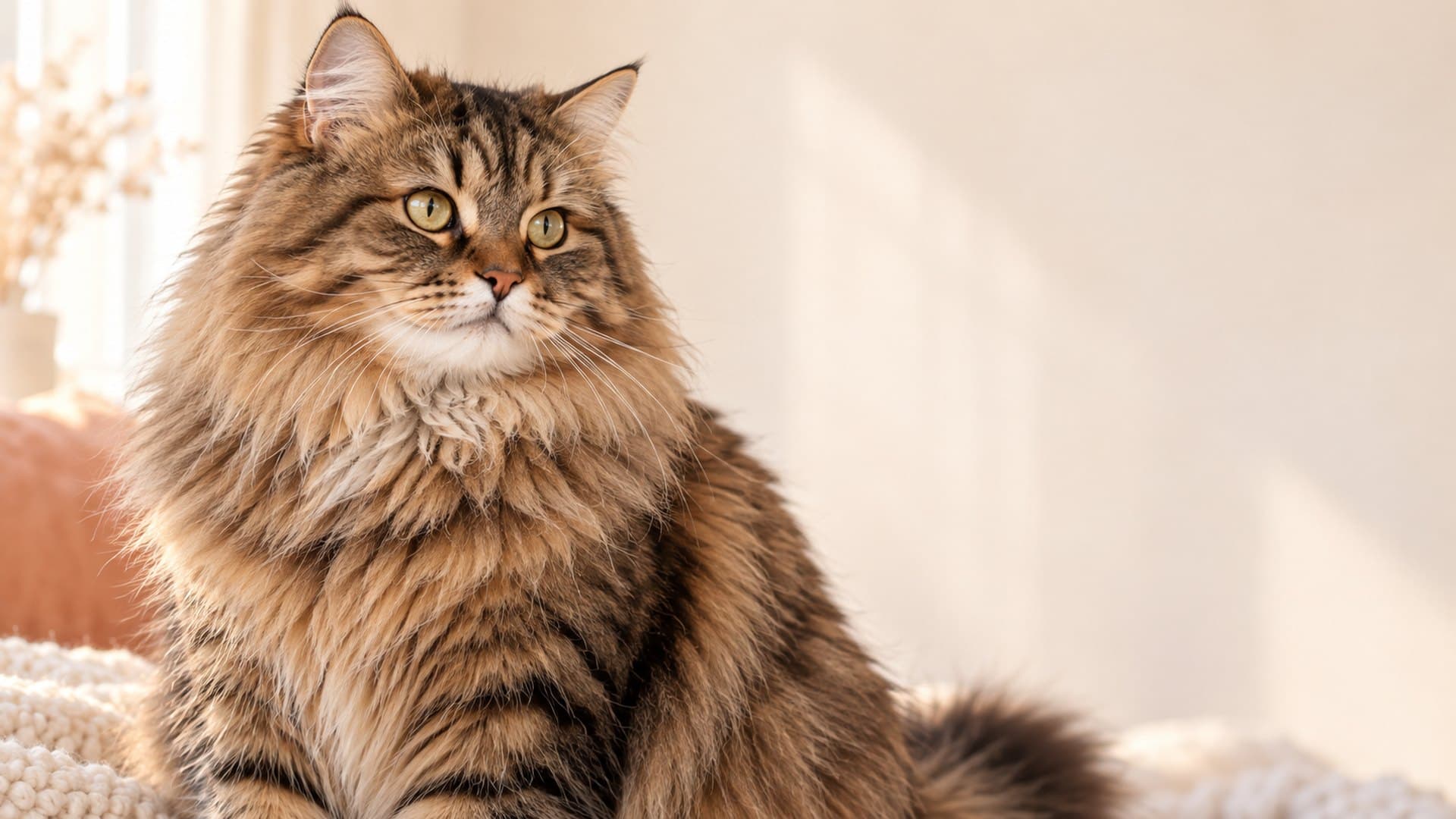
The Siberian is a robust semi-longhaired cat with a dense triple coat, full tail and active character. Its gentle expression should not mislead you: this is a curious, powerful animal. Memorable breeds attract neat stories that are not always accurate. Here are six common claims, considered without extremes: a real cat is more complicated than any label.
Myth 1: Siberian cats never cause allergies.
In reality: No breed is reliably hypoallergenic. If someone in the family has allergies, their individual response to the particular cat matters; seek medical guidance from an allergist.
Myth 2: Every cat of this breed has the same personality.
In reality: Many Siberians form close bonds with their families, watch people carefully and join in household life. They can be gentle and patient, while still needing their personal space respected. This is a typical breed portrait, not a promise about any individual cat. Kittens vary, and their environment and early experiences matter too.
Myth 3: This breed never causes allergies.
In reality: Cat allergy is usually triggered by proteins, including Fel d 1, rather than coat length itself. Individual responses differ, so no breed should be promised as reliably hypoallergenic.
Myth 4: It needs no special care at all.
In reality: Set brushing frequency by the individual cat's coat, check the skin and never pull mats out by force. Introduce paw, ear and mouth checks gradually and without force. Trim claws when needed and discuss dental care with a veterinarian. Itching, discharge, odour, pain or a sudden change in behaviour calls for professional assessment rather than home experiments.
Myth 5: A pedigree guarantees perfect health.
In reality: Like other cats, Siberians can develop heart and other conditions; a breed name is no health guarantee. Pay attention to family history, veterinary checks and unusual changes in breathing or activity. No breed comes with a health guarantee. Ask about parental screening, relevant test results, rearing conditions and the kitten's own veterinary records. A DNA test answers a question about a particular gene variant; it does not replace a clinical examination.
Myth 6: Food and a bed are all this cat needs.
In reality: A Siberian can thrive in a flat with vertical routes, a stable scratching post and a quiet resting area. Furniture should be sized for the strength and weight of an adult cat. Short daily sessions with a wand toy, ball or puzzle feeder let natural hunting behaviour have an outlet. Wind play down calmly, and put strings and small parts away when nobody is watching. Rotate toys to keep them interesting.
How to test breed claims
When a claim sounds like a promise about every member of a breed, ask whether it describes only a common tendency. Compare it with the breed standard, veterinary sources and the individual kitten in front of you. Words such as “always”, “never” and “completely safe” usually hide important exceptions.
The breed developed from cats that lived in Russia over many generations. Its dense coat suits a cold climate, but modern pet Siberians live in warm homes and do not need outings in freezing weather. The Siberian is recognised by its strong body, rounded outlines, dense triple coat and full adult ruff. Kittens mature slowly, and seasonal coat thickness changes noticeably. A Siberian can thrive in a flat with vertical routes, a stable scratching post and a quiet resting area. Furniture should be sized for the strength and weight of an adult cat. With gradual introductions, Siberians often live well with children and other animals. Children need to learn a cat's signals, and visitors should not pursue it when it chooses to hide.
When meeting the breeder, ask for veterinary records and a description of the kitten’s usual routine. Prepare questions in advance and note the answers so you can compare them calmly with your own circumstances. After the move, change the household routine gradually and keep familiar places for sleeping, eating and play. No breed comes with a health guarantee. Ask about parental screening, relevant test results, rearing conditions and the kitten's own veterinary records. A DNA test answers a question about a particular gene variant; it does not replace a clinical examination.
Read more on the breed page. Check the site for available kittens; if none are available now, you can join the waiting list.