
Russian Blue myths: allergies, shedding and personality
Hypoallergenic, never sheds, cold towards people and once lived at the tsars' court? We look at popular myths about the Russian Blue.
Published 3 min read

The Russian Blue has inspired lots of lovely stories, from cats of the Russian royal family to the perfect cat for allergy sufferers. Some are simply legends, some are marketing, and a few can let down a family choosing a kitten. Here are the most common claims and what's actually known about them.
“The Russian Blue is hypoallergenic”
This is probably the most widespread myth, and the riskiest. The main cat allergen, a protein called Fel d 1, is produced by the sebaceous and salivary glands of every cat. When a cat grooms, it spreads the protein over its coat, and from there it ends up on furniture, fabrics and in the air. Levels of Fel d 1 can vary many times over between individual cats, even of the same breed, but there's no scientific evidence that any breed doesn't cause allergies. Intact males usually produce more of the allergen. If someone in your family has allergies, talk to an allergist and spend time around cats of the breed before you decide.
“It hardly sheds”
The Russian Blue's coat is short, but it's a very dense double coat. It does show up less on clothes than long hair, but these cats shed like any others, and quite heavily in season. Regular brushing keeps the amount of fur around the house under control and reduces how much hair the cat swallows while grooming.
“Any grey cat is a Russian Blue”
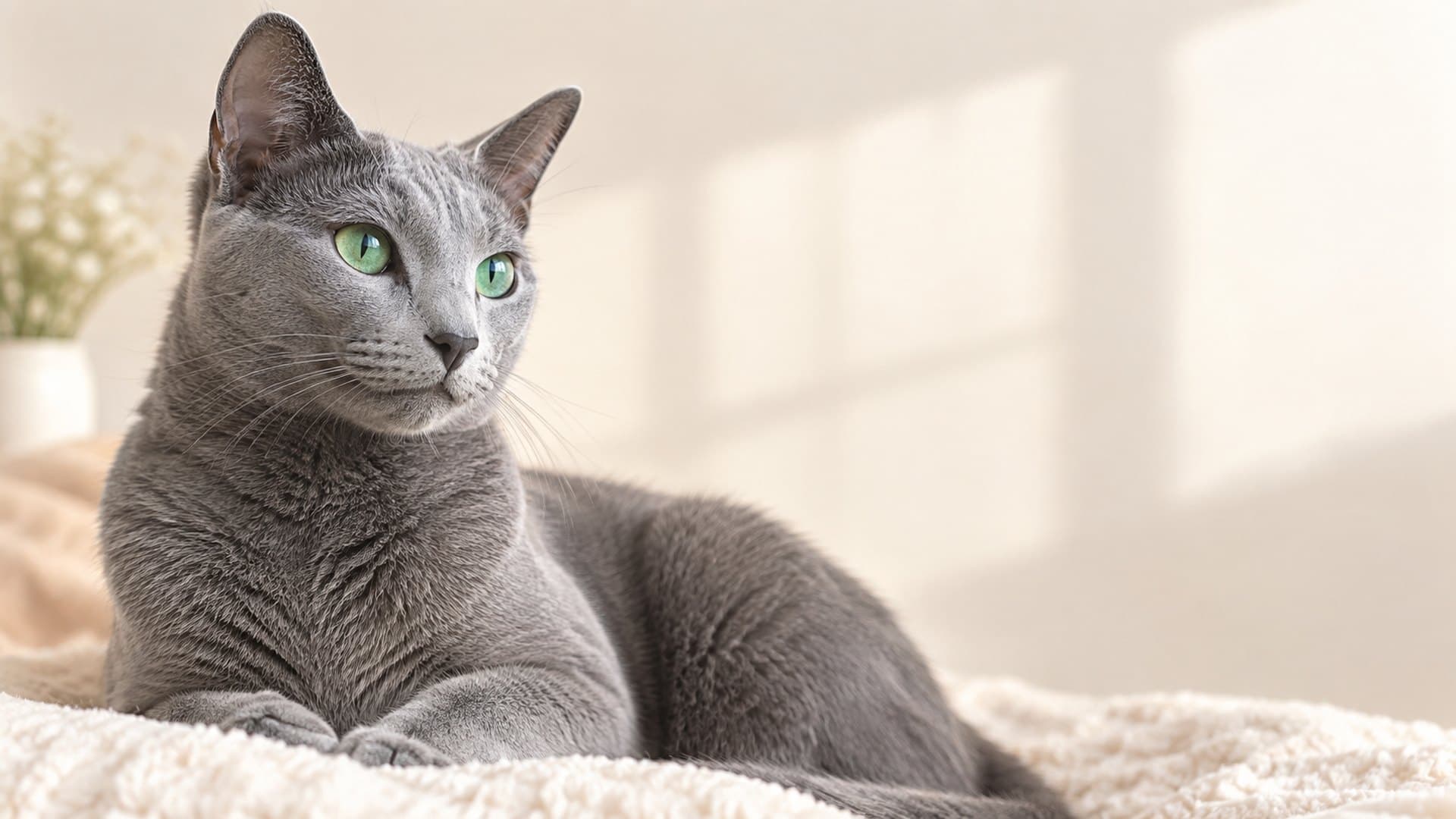
Blue coats turn up in many breeds and in ordinary moggies too. Breeds often confused with the Russian Blue include the British Shorthair, with its round head and copper eyes, the French Chartreux, the Thai Korat and the longhaired Nebelung. What sets the Russian Blue apart is its graceful build, wedge-shaped head, green eyes and that special coat that stands up and shimmers silver. And what proves a cat belongs to the breed isn't its colour but its pedigree.
“It's a cold, aloof cat”
The Russian Blue really is reserved with strangers and often hides when guests arrive. But with its own people it's gentle, attentive and deeply attached, and many are finely tuned to their owners' moods. This breed simply doesn't hand out affection to everyone: trust has to be earned, and the cat opens up gradually. If you respect its pace and don't force contact, you'll gain a very devoted friend.
“Its eyes are green from birth”
No. Kittens are born with bluish eyes, like all kittens. Then the eyes turn yellowish, often with a green ring around the pupil, and only gradually become a rich green. This can take months, or even more than a year. So yellowish eyes in a young kitten are no sign that it's the “wrong” breed.
“The breed lived at the tsars' court”
The romantic tale of cats belonging to the Russian tsars is very popular, but there's no documentary evidence for it. The breed's written history only begins at the end of the 19th century, when Archangel cats started appearing at shows in England. So an origin in northern port towns looks far more likely than a palace one. Not that it makes the breed's aristocratic manners any less charming.
“If the cat has a good appetite, weight isn't a worry”
Russian Blues usually have a hearty appetite, and that's exactly what can cause trouble. The CFA warns that without portion control and regular play, these cats tend to gain weight. And the dense coat hides extra pounds very well. Weigh your cat regularly, measure its food and don't feed it from the table. Your vet can help work out the ideal weight for your particular cat.
Promotional descriptions often highlight only attractive traits, so ask for a real example. How does the cat respond to visitors? How does it handle a short period alone? What care does this particular coat need? Discuss difficulties before choosing a kitten rather than after the move. An honest answer may differ from an appealing breed stereotype, and will help you prepare the home and routine. The best guide is meeting the individual kitten and watching its habits.
You'll find more about the breed on the breed page and in our article “Russian Blue health”. You can check the site to see whether any kittens of this breed are available right now, and if not, join the waiting list.