
Ragdoll health: screening and questions for breeders
Health questions and screening to discuss before bringing home a Ragdoll.
Published 4 min read

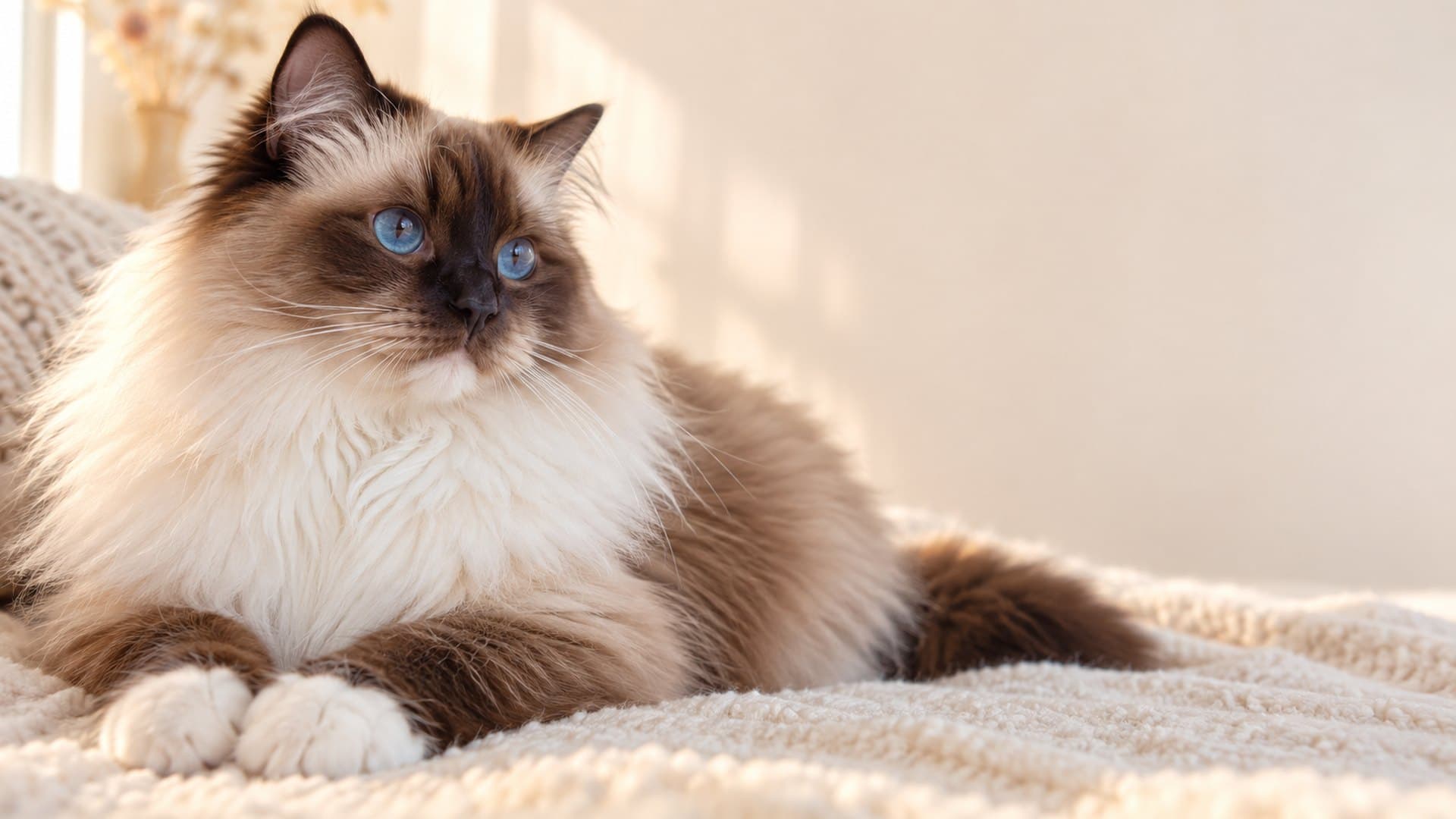
The Ragdoll is a large, semi-longhaired cat with blue eyes and pointed colouring. It is often described as an easy-going companion that enjoys being close to people. Breed-related risks are reasons to ask precise questions, not to fear every symptom. A veterinarian must assess the health of an individual cat.
What to watch for
A breed-associated MYBPC3 variant is linked to hypertrophic cardiomyopathy (HCM) risk in Ragdolls. A negative DNA result for this single variant does not rule out every form of HCM or replace heart examination. Predisposition is not a diagnosis: family history, screening results and the individual cat's condition all matter.
Parental tests and screening
Ask for the parents' DNA results for the MYBPC3 R820W variant and for veterinary-recommended heart screening. Echocardiography is used to diagnose HCM, with interpretation by a veterinary cardiologist. No breed comes with a health guarantee. Ask about parental screening, relevant test results, rearing conditions and the kitten's own veterinary records. A DNA test answers a question about a particular gene variant; it does not replace a clinical examination. Ask for written results rather than a verbal assurance that everything is fine.
The kitten's health
Ask for veterinary records and details of age-appropriate examinations, vaccinations and parasite control already completed. Observe how the kitten moves, breathes, eats and responds to people. Agree its future care plan with your veterinarian.
Reasons for an unscheduled visit
Breathing difficulty, fainting, marked lethargy, pain, refusal to eat or a sudden change in gait need prompt veterinary assessment. Do not diagnose a cat from photographs or forum advice.
The long view
A Ragdoll needs wide resting places, a stable cat tree and a spot near its family. It can thrive in a flat with play, a safe window view and freedom to rest without being disturbed. Every cat needs a predictable routine, a clean litter tray, fresh water, places to rest and somewhere to hide. Even a sociable cat must be free to end an interaction. Children should learn not to wake an animal or hold it against its will. Regular preventive check-ups can catch changes that are easy to miss at home.
What to watch at home
Note unusual changes in eating, movement, litter habits, sleep and breathing at rest. These observations help a vet understand a pattern, but do not let an owner make a diagnosis alone. If a sign is sudden or severe, seek help rather than waiting for a scheduled visit.
The soft semi-long coat usually lacks an excessively dense undercoat, but it can still tangle under the arms, on the belly and behind the ears. White 'mittens' in the mitted pattern are part of its colouring, not a separate breed. A young Ragdoll can be very lively, while an adult usually prefers moderate but regular play. Its large body needs sturdy, stable climbing furniture, and a placid manner does not remove the need for exercise. A Ragdoll needs wide resting places, a stable cat tree and a spot near its family. It can thrive in a flat with play, a safe window view and freedom to rest without being disturbed. Ragdolls often get on with children and other animals when treated gently. Tolerance is no licence to carry a cat like a toy: support its large body with both hands and let it go when it wants to leave.
When meeting the breeder, ask for veterinary records and a description of the kitten’s usual routine. Prepare questions in advance and note the answers so you can compare them calmly with your own circumstances. After the move, change the household routine gradually and keep familiar places for sleeping, eating and play. No breed comes with a health guarantee. Ask about parental screening, relevant test results, rearing conditions and the kitten's own veterinary records. A DNA test answers a question about a particular gene variant; it does not replace a clinical examination.
Review test results with a veterinarian: a negative result for one known variant does not rule out every condition, while a positive result does not always predict symptom severity. Ask when and by whom the screening was done, whether both parents have records, and how often clinical checks should be repeated. Keep copies after the move and give them to your own vet. Assess the individual kitten as well as its breed background.
Read more on the breed page. Check the site for available kittens; if none are available now, you can join the waiting list.