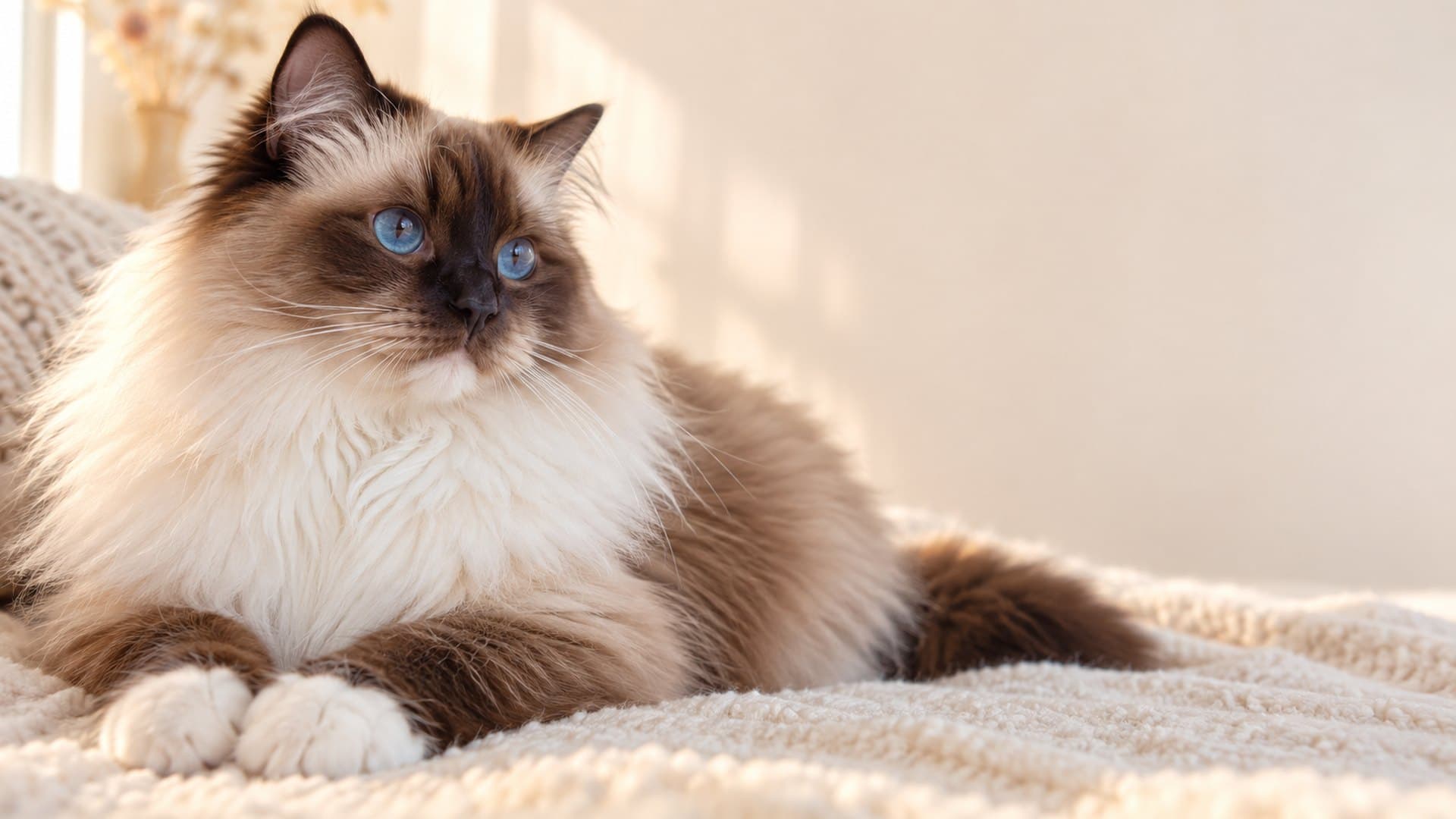

Caring for a Ragdoll: coat, hygiene and daily play
Coat, hygiene, play and check-ups: practical care for a Ragdoll.
Published 4 min read

The Ragdoll is a large, semi-longhaired cat with blue eyes and pointed colouring. It is often described as an easy-going companion that enjoys being close to people. Care works best when it is regular and calm, rather than a rigid timetable followed for its own sake. The habits below also make changes easier to notice early.
Coat and skin
The soft semi-long coat usually lacks an excessively dense undercoat, but it can still tangle under the arms, on the belly and behind the ears. White 'mittens' in the mitted pattern are part of its colouring, not a separate breed. Set brushing frequency by the individual cat's coat, check the skin and never pull mats out by force. Choose a tool that does not scrape the skin, and stop when the cat has had enough. Several short pleasant sessions are better than one long struggle.
Eyes, ears, claws and teeth
Introduce paw, ear and mouth checks gradually and without force. Trim claws when needed and discuss dental care with a veterinarian. Itching, discharge, odour, pain or a sudden change in behaviour calls for professional assessment rather than home experiments. Do not put cotton buds into the ear canal or use human products without veterinary advice.
Bathing and shedding
A healthy cat does not need baths by calendar. If the coat is dirty or a vet recommends a different routine, choose a gentle cat product and dry the cat thoroughly. Check the coat more often during shedding periods and remove loose hair gently.
Food and movement
A young Ragdoll can be very lively, while an adult usually prefers moderate but regular play. Its large body needs sturdy, stable climbing furniture, and a placid manner does not remove the need for exercise. Short daily sessions with a wand toy, ball or puzzle feeder let natural hunting behaviour have an outlet. Wind play down calmly, and put strings and small parts away when nobody is watching. Rotate toys to keep them interesting. Watch body condition rather than just a number on the scales, and agree portions and diet with a vet for the cat's age and health.
When to seek help
A breed-associated MYBPC3 variant is linked to hypertrophic cardiomyopathy (HCM) risk in Ragdolls. A negative DNA result for this single variant does not rule out every form of HCM or replace heart examination. Itching, bald patches, irritation, eye or ear discharge and changes in appetite warrant an examination. Diagnosis and treatment belong to a veterinarian.
Care as a daily habit
Start with brief, calm procedures: touch a paw, glance at an eye or ear, make one stroke with the brush. Reward cooperation and stop before the cat struggles. If it already fears a tool, return to an easier step. Force does not improve grooming and may damage trust for a long time.
A Ragdoll needs wide resting places, a stable cat tree and a spot near its family. It can thrive in a flat with play, a safe window view and freedom to rest without being disturbed. Ragdolls often get on with children and other animals when treated gently. Tolerance is no licence to carry a cat like a toy: support its large body with both hands and let it go when it wants to leave. A breed-associated MYBPC3 variant is linked to hypertrophic cardiomyopathy (HCM) risk in Ragdolls. A negative DNA result for this single variant does not rule out every form of HCM or replace heart examination. A young Ragdoll can be very lively, while an adult usually prefers moderate but regular play. Its large body needs sturdy, stable climbing furniture, and a placid manner does not remove the need for exercise.
When meeting the breeder, ask for veterinary records and a description of the kitten’s usual routine. Prepare questions in advance and note the answers so you can compare them calmly with your own circumstances. After the move, change the household routine gradually and keep familiar places for sleeping, eating and play. No breed comes with a health guarantee. Ask about parental screening, relevant test results, rearing conditions and the kitten's own veterinary records. A DNA test answers a question about a particular gene variant; it does not replace a clinical examination.
Read more on the breed page. Check the site for available kittens; if none are available now, you can join the waiting list.