

Devon Rex health: DNA tests, blood type and what to ask
Congenital myasthenic syndrome, blood type B, kneecaps and the heart: what to know about Devon health and which paperwork to ask a breeder for.
Published 4 min read
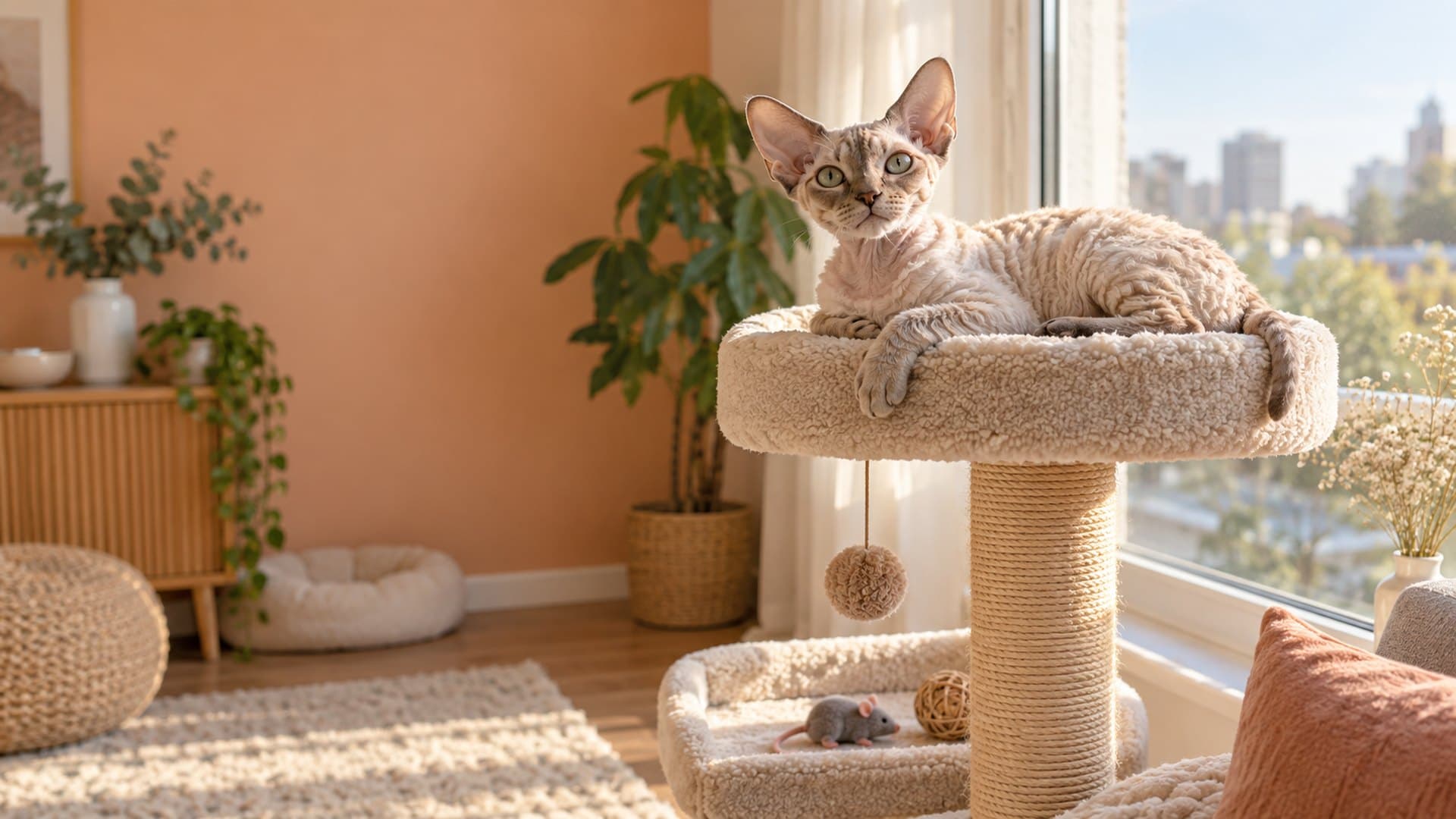
The Devon Rex is an energetic, cheerful cat, but like any breed with a small gene pool, it has a few well-described inherited conditions. The breed descends from a single cat, Kirlee, and in its early years it was bred from closely related animals. The UK registry GCCF openly lists kneecap luxation, a blood clotting disorder and inherited myopathy among the problems that have followed the Devon from the very beginning. The good news is that reliable tests exist for some of them, and responsible breeders use them. This article is not meant to scare you, but to help you ask the right questions. Diagnosis and treatment are always a matter for your vet.
Congenital myasthenic syndrome (CMS)
This inherited neuromuscular disease used to be called Devon Rex spasticity or myopathy. We now know it is caused by a mutation in the COLQ gene, which disrupts the transmission of signals from nerves to muscles.
Signs usually appear in the first months of life:
- weakness and quick tiring after play or excitement;
- the head and neck droop, and the shoulder blades stick out;
- a typical chipmunk or dog-begging posture;
- difficulty swallowing, sometimes with choking.
The disease is recessive: only a kitten that inherits the mutation from both parents is affected. Carriers are healthy but can pass the mutation on. A simple DNA test exists, and under GCCF rules a Devon can only be registered on the active (breeding) register if it or its parents have tested clear. Ask the breeder to show you the results.
Blood type B
Cats have blood types A, B and the rare AB. Type A dominates in most breeds, but among Devon Rex cats type B is much more common — estimates range from about a quarter to almost half. This matters for two reasons:
- a transfusion of incompatible blood can cause a severe, life-threatening reaction, so the blood type must always be checked before a transfusion;
- if a type B queen has type A kittens, antibodies in her colostrum can destroy their red blood cells; this is neonatal isoerythrolysis, which can kill kittens in their first days.
Responsible breeders know their cats' blood types and plan matings to avoid this. For you, it helps to know your cat's blood type and share it with your vet.
Kneecaps
Kneecap (patellar) luxation is more common in Devons than in cats overall. The kneecap slips out of its groove, and the cat may skip on one leg, suddenly limp or be reluctant to jump. Mild cases can be hard to spot, so it is worth having the knees checked at routine visits. Ideally, a vet will have examined the knees of both the parents and the kitten.
The heart
Hypertrophic cardiomyopathy (HCM) occurs in many breeds, and Devon Rex cats are screened for it too. There is no DNA test for HCM in the Devon, so the main tool is periodic echocardiography by a veterinary cardiologist. The disease can stay hidden for a long time, so ask the breeder whether the parents have had heart scans and when.
Blood clotting
A rare inherited clotting disorder involving the vitamin K-dependent clotting factors has been described in the Devon. An affected cat may bleed for longer than usual even after a minor injury or a blood test. It is uncommon, but before any surgery remind your vet that your cat is a Devon Rex so they can decide whether extra tests are needed.
Questions to ask the breeder
- Have the parents been tested for congenital myasthenic syndrome (COLQ)? Can I see the results?
- What are the blood types of the parents and the kitten?
- Has a vet checked the knees of the parents and the kitten?
- Do the parents have echocardiograms?
- Has a vet examined the kitten, which vaccinations and parasite treatments have been done, and will there be a written contract?
An open breeder will be happy to show you the paperwork and explain the results. After the kitten moves in, discuss a check-up plan with your vet. For the Devon's skin, ears and coat, read Devon Rex care.
Review test results with a veterinarian: a negative result for one known variant does not rule out every condition, while a positive result does not always predict symptom severity. Ask when and by whom the screening was done, whether both parents have records, and how often clinical checks should be repeated. Keep copies after the move and give them to your own vet. Assess the individual kitten as well as its breed background.
Find out more on the breed page. See whether there are kittens of this breed right now, or join the waiting list.